
Doctors Without Borders
Global Healthcare Support
Doctors Without Borders: Medical aid where it's needed most
Historically, organizations in the humanitarian sector often rely on multiple Salesforce systems to manage global operations, leading to decentralization and disconnected data. Tackling this challenge requires specialized non-profit expertise to merge multiple CRMs into one unified solution.
To future-proof the new system, our team helps resolve pre-existing security issues, revamping access control and record management while enhancing platform stability through modern Salesforce APIs.
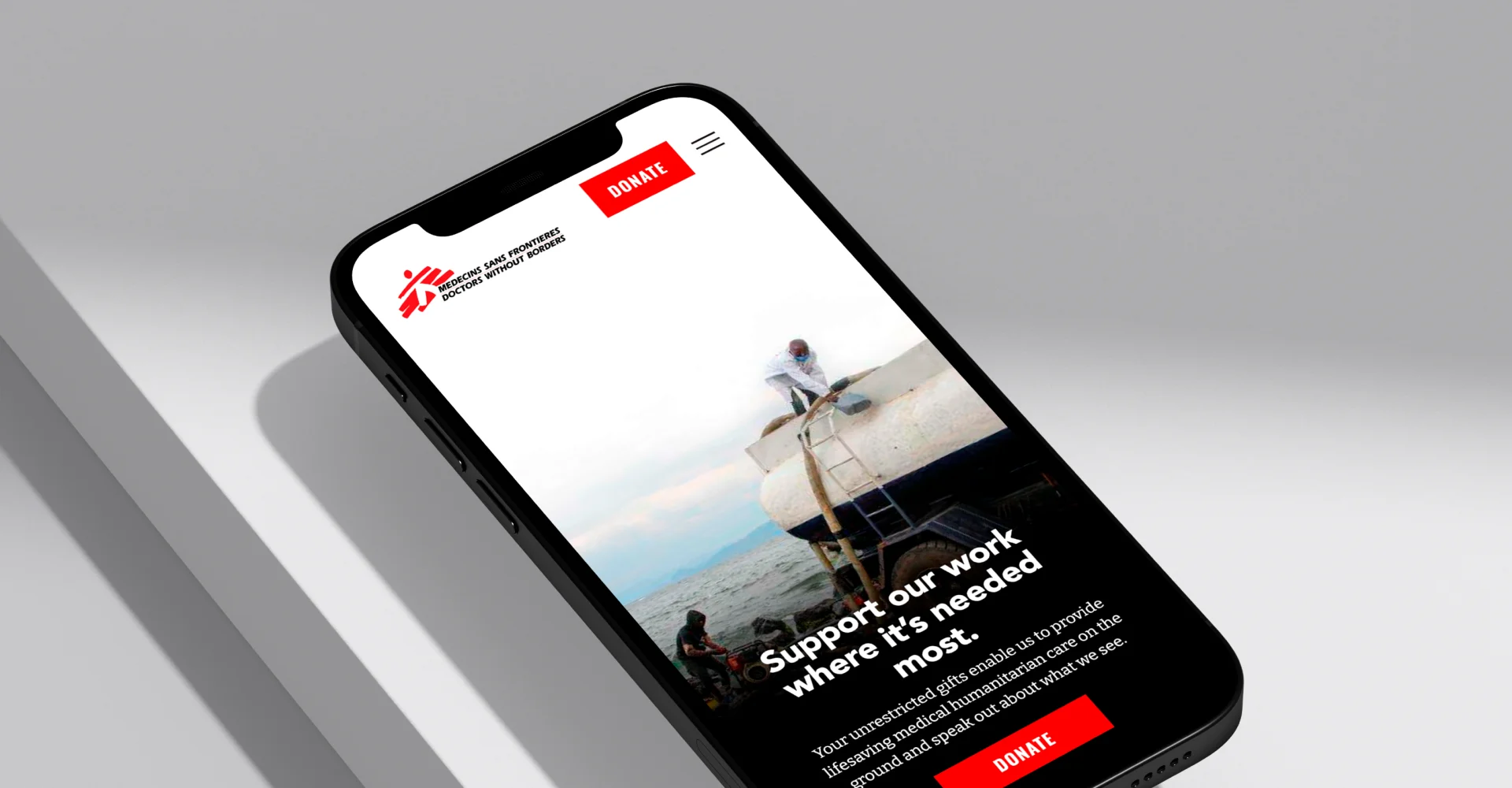
System Optimization
Streamlining Operations Across Multiple Platforms
By consolidating disparate databases into a single centralized architecture, humanitarian organizations can gain a comprehensive view of their operations, donor relations, and field logistics.
Continuous maintenance and iterative updates ensure that the platform remains secure, stable, and fully aligned with evolving institutional requirements.

Technology Stack
Tools and Technologies for Non-Profit Scaling
We leverage robust cloud solutions and modern development frameworks to deliver scalable, secure, and maintainable Salesforce implementations for humanitarian missions.
- Apex development for custom business logic and automated workflows
- Web to Lead Forms for efficient engagement and outreach management
- Lightning Web Components (LWC) for modern, responsive user interfaces
- Sales Cloud implementation for streamlined donor and stakeholder management
- Nonprofit Success Pack (NPSP) configuration tailored for mission-driven needs

Everything You Need to Know About CRM Consolidation
Unifying multiple CRM instances into a single source of truth requires careful planning, robust security controls, and deep platform expertise.
When organizations grow across different regions, separate databases often emerge organically. While practical at first, this fragmentation makes it difficult to maintain data integrity, track outcomes, and secure sensitive information effectively.
Our approach focuses on structured migration strategies, comprehensive security audits, and continuous system refinement to ensure long-term stability and performance.

Custom Solutions for Complex Institutional Needs
Every non-profit organization operates under unique constraints and regulatory frameworks. We work closely with stakeholders to design and implement tailored technical architectures that scale seamlessly with your mission.
Key Capabilities and Approach
CRM Consolidation
Merging multiple disconnected systems into a single, unified database to eliminate data silos and improve operational visibility.
Security & Access Control
Revamping permission models and record management protocols to protect sensitive data and ensure strict compliance standards.
API Modernization
Upgrading integrations and leveraging the latest platform APIs to enhance overall system stability and performance.
Custom Development
Building tailored components, automated workflows, and specialized forms to support unique operational workflows.
Continuous Support
Providing ongoing fine-tuning, routine maintenance, and monthly updates to keep platforms running smoothly over time.
Comparing Implementation Approaches
Evaluating how structured CRM consolidation compares to maintaining legacy multi-instance setups across large organizations.
| Feature | Legacy Multi-CRM | Unified Platform | DGL Approach |
|---|---|---|---|
| Data Integration | Siloed and fragmented | Centralized source | Seamless migration |
| Security Management | Decentralized controls | Standardized rules | Robust audits |
| System Performance | Inconsistent speed | Optimized APIs | Future-proof design |
| Ongoing Maintenance | Complex and costly | Streamlined updates | Iterative support |
FAQs

Why do organizations end up with multiple Salesforce instances?
As global organizations expand across different regions or departments, separate teams often adopt independent tools and databases to meet immediate local needs. Over time, this organic growth creates data silos and administrative complexity.
How do you handle data security during a CRM migration?
We conduct thorough security audits before migration, revamping access control lists, permission sets, and record management protocols to ensure all sensitive information remains fully protected under modern compliance standards.
What technologies are typically used for non-profit CRM solutions?
Common technologies include Salesforce Sales Cloud, the Nonprofit Success Pack (NPSP), Apex for custom business logic, Lightning Web Components for user interfaces, and integrated web forms for streamlined outreach.
How long does a typical CRM consolidation project take?
Project timelines vary depending on the volume of data, the number of existing systems, and the complexity of custom workflows. A structured discovery phase helps establish a clear roadmap tailored to your specific organizational needs.
What kind of ongoing support is provided after launch?
We offer continuous system fine-tuning, routine maintenance, performance monitoring, and regular updates to ensure the platform evolves alongside your organization's mission and operational goals.
Can custom workflows be built into the unified platform?
Yes. We design and implement custom Apex triggers, automated workflows, and tailored user interfaces using Lightning Web Components to match your exact operational requirements.
get in touch
Let's Start a Conversation
Have a project in mind? We'd love to hear about it. Fill out the form and our team will get back to you within 24 hours.
Address
1563 McClure Woodland ca 95776
John@digitalgrowthlab.org
Phone
+1 7866924887
Response Time
Within 24 hours