
AR/VR development services
Immersive technology
Bring your vision to life with our XR experts
Whether you are looking to develop a custom VR game, create an AR-powered telehealth solution, build a training simulator, or take your sales to another level with an AR app, our team applies the latest technology to create immersive experiences that fuse the physical and digital worlds.
Share with us your ideas for augmented, immersive, and 360-degree applications and our developers will create engaging, highly intuitive, and memorable experiences that transform the user journey.

Advanced capabilities
A holistic approach to augmented and virtual reality
We deliver custom applications that skillfully overlay the user’s environment with 3D models, animation, and ultra-high definition video. As companies in diverse industries realize, spatial computing enriches training, communication, customer service, and education.
Leverage our expertise to combine AR and VR elements so digital and real-world objects interconnect seamlessly. Our engineers tap cloud-based computer processing, environmental data, and advanced input methods to build solutions that modernize exploration.

Toolsets and frameworks
The frontier of AR and VR app development
Utilizing industry-standard frameworks and software development kits, we build robust core functionality or augment your existing offerings.
- Leverage OpenCV, Vuforia, ARKit, Unity, and Wikitude to develop core functionality or augment your AR/VR offering.
- Build cross-platform virtual and augmented experiences that work smoothly across mobile phones, tablets, headsets, and wearables.
- Develop customized geo-located applications providing relevant directional guidance based on GPS and sensor technologies.
- Integrate recognition-based features where real-world objects, hand tracking, and ambient clues fuel personalized user interactions.
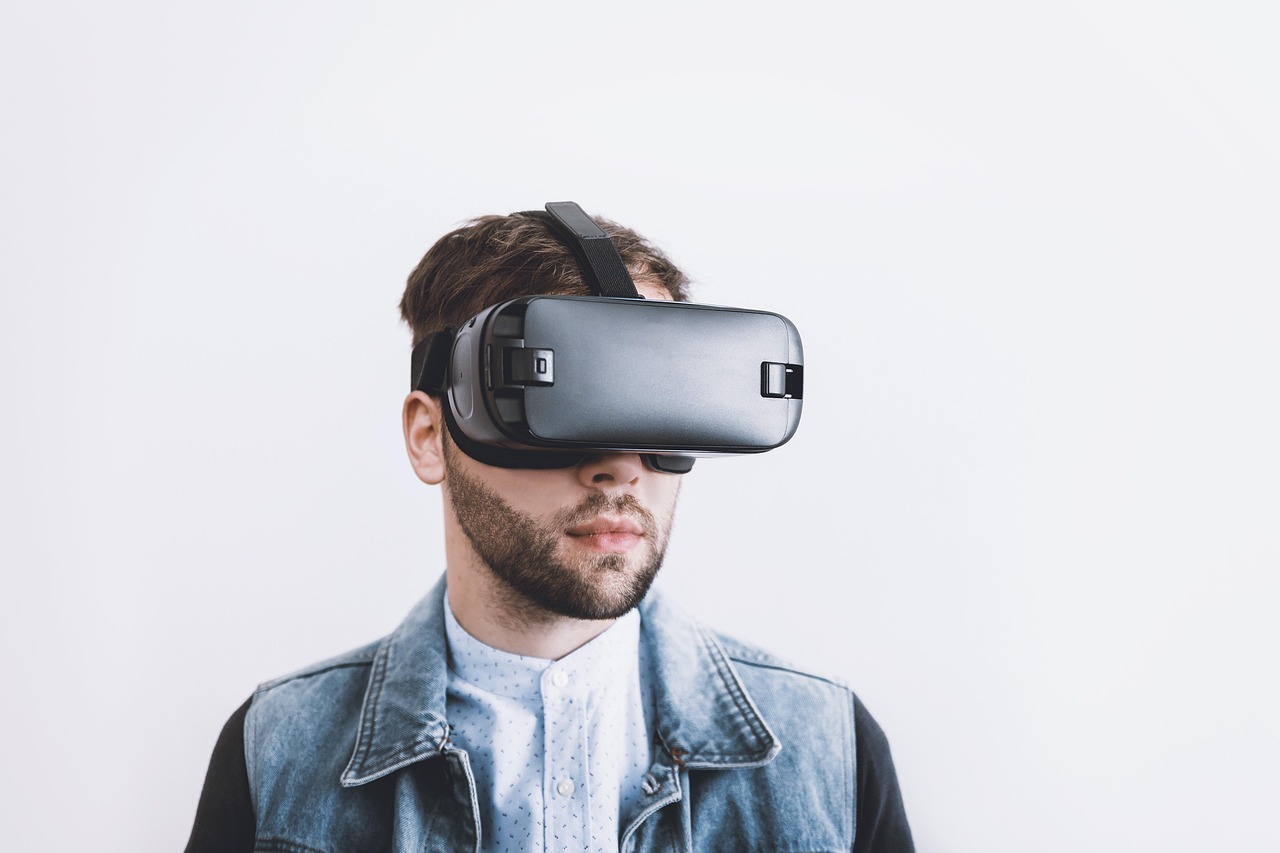
Everything you need to know about spatial computing development
Our engineers take your interactive projects into the next dimension with robust cross-platform software.
From 360-degree video streaming and photorealistic 3D rendering to location-aware navigation, our team helps organizations across retail, healthcare, real estate, and education implement immersive software that engages users and drives meaningful business outcomes.
We collaborate closely with your internal stakeholders to ensure your AR, VR, or mixed reality products integrate smoothly with existing enterprise infrastructure, databases, and cloud environments.

Cross-platform and hardware compatibility
We build applications designed to run reliably across a wide range of hardware ecosystems. Whether targeting consumer smartphones, dedicated virtual reality headsets, or industrial wearables, our code architecture ensures consistent performance, optimal frame rates, and responsive controls for every user.
Core AR and VR service offerings
Custom AR Apps
Develop interactive applications that enhance real-world environments with digital overlays, 3D models, and real-time data feeds.
Advanced VR Software
Create immersive virtual environments designed for specialized training simulations, remote collaboration, and interactive education.
Mixed Reality
Combine physical and digital elements where virtual objects interact dynamically with real-world obstacles and user inputs.
360-Degree Video
Support omnidirectional video streams that immerse users in transformative, high-definition recorded or live-action experiences.
3D Rendering
Render photorealistic interactive 3D content, panoramas, and architectural walkthroughs streamed directly to devices in real time.
AR and VR development comparison
Explore how different immersive paradigms address your operational requirements, user engagement goals, and technical infrastructure.
| Technology | Primary Focus | Ideal Use Case | Hardware Required |
|---|---|---|---|
| Augmented Reality | Digital overlays on the real world | Retail previews and field service | Smartphones, tablets, smart glasses |
| Virtual Reality | Fully enclosed digital environments | Simulations and remote training | Dedicated VR headsets and controllers |
| Mixed Reality | Interactive physical-digital fusion | Engineering and collaborative design | Advanced MR visors and sensors |
FAQs

What industries benefit most from AR and VR development?
Organizations in retail, healthcare, real estate, manufacturing, education, and entertainment frequently adopt AR and VR solutions. Retailers use virtual fitting rooms and interactive product previews, healthcare providers build surgical assistance and training simulators, real estate firms offer 3D property tours, and manufacturers deploy safety training and equipment repair guides.
How do you ensure cross-platform compatibility for AR/VR apps?
Our engineers utilize robust game engines and multi-platform development frameworks such as Unity alongside native SDKs like ARKit and ARCore. This approach allows us to write scalable code that compiles efficiently across mobile operating systems, standalone headsets, and web browsers while maintaining high frame rates.
What is the difference between AR, VR, and mixed reality?
Augmented reality overlays digital elements onto the user's view of the physical world, usually via a smartphone or smart glasses. Virtual reality completely immerses the user in a computer-generated digital environment using a headset. Mixed reality blends both approaches, allowing digital objects to interact realistically with physical surfaces and obstacles.
Can your team integrate AR/VR apps with our existing enterprise software?
Yes. We design custom APIs and backend architectures that connect your immersive applications to existing enterprise databases, cloud storage, CRM platforms, and IoT sensor networks to enable real-time data exchange and user synchronization.
How long does it take to develop a custom AR or VR application?
Project timelines vary significantly depending on application complexity, 3D asset creation requirements, hardware target platforms, and backend integration needs. A proof-of-concept prototype can often be delivered in a few weeks, while a full enterprise-grade simulation requires a structured multi-phase software development lifecycle.
What tools and frameworks do you use for development?
Our technical stack includes Unity, OpenCV, Vuforia, ARKit, ARCore, and Wikitude. We select the specific toolset based on your project goals, hardware constraints, performance requirements, and desired user experience characteristics.
get in touch
Let's Start a Conversation
Have a project in mind? We'd love to hear about it. Fill out the form and our team will get back to you within 24 hours.
Address
1563 McClure Woodland ca 95776
John@digitalgrowthlab.org
Phone
+1 7866924887
Response Time
Within 24 hours