
An AI-assisted social discovery platform built on real experiences and honest ratings.
01 Executive summary
A community where recommendations come from real people with a visible track record.
Client and market
Trubla is a UK-based, AI-assisted community and discovery platform. Its audience includes community-driven explorers, content creators and storytellers, and travel and lifestyle enthusiasts.
Challenge
Make seven-plus business domains, from discovery and messaging to trust and safety, work together across three client applications while each stays independently scalable.
Product
People discover trusted recommendations, publish their own experiences, build a reputation, connect with creators and explore personalised, location-aware content on iOS, Android and the web.
What Digital Growth Labs delivered
- Product discovery, user interviews, branding and UX/UI design
- Native iOS and Android apps and a React and Next.js web platform
- Ruby on Rails backend with PostgreSQL, Redis, Firebase and AWS
- Real-time messaging, moderation, analytics, English and Arabic localisation, QA and releases
9mo
MVP development
12+mo
Total partnership
8
Specialists on the team
3
Client applications
Attribution. Digital Growth Labs delivered Trubla as white-label engineering partner to URLaunched (You are launched), where this project is also published.
02 The challenge
Recommendations are everywhere. Trustworthy ones are hard to find.
User interviews showed that people come to Trubla to see real experiences before trying something new. The obstacles were consistent: too much sponsored or biased content, trustworthy opinions that are hard to find, and recommendations that don't feel personal.
Explorers
Want to find reliable experiences quickly and feel confident before choosing what to try, visit or recommend. Sponsored and biased content makes that hard to judge.
Creators
Want honest experiences to reach people who value them, and to grow trusted influence through meaningful connection rather than traditional engagement metrics.
Business goal
A scalable product foundation connecting community, AI-assisted recommendations, experience sharing, real-time messaging, analytics and operations, designed for continuous evolution rather than a fixed-feature MVP.
Product complexity
Two kinds of users with different motivations, content that must be easy to publish yet safe to show, and trust that has to be visible behind every opinion.
Technical complexity
- AI-powered discovery
- Real-time messaging
- Multi-platform synchronisation
- Location-aware experiences
- Trust and safety
- Product analytics
- Administrative operations
- iOS, Android and web
- English and Arabic
Core problem
Support real-time interactions, AI-assisted recommendations, community engagement and operational workflows consistently across every client application.
03 Our approach
Understand what earns trust, then build a platform that can grow around it.
End-to-end product development, from interviews and brand through native apps, web and backend, to production releases and continued improvement after launch.
-
01
Discovery
User interviews on who Trubla users are, what motivates them, what content they value and what gets in their way. Two personas were defined: an authentic creator and an experience explorer.
What it solvedDiscovery and sharing logic shaped by real motivations.
-
02
Product strategy
Three product decisions: a flexible entry with guest access, discovery as the main interaction loop, and profiles that act as proof of trust.
What it solvedFocus on the actions users repeat most.
-
03
UX, UI and brand
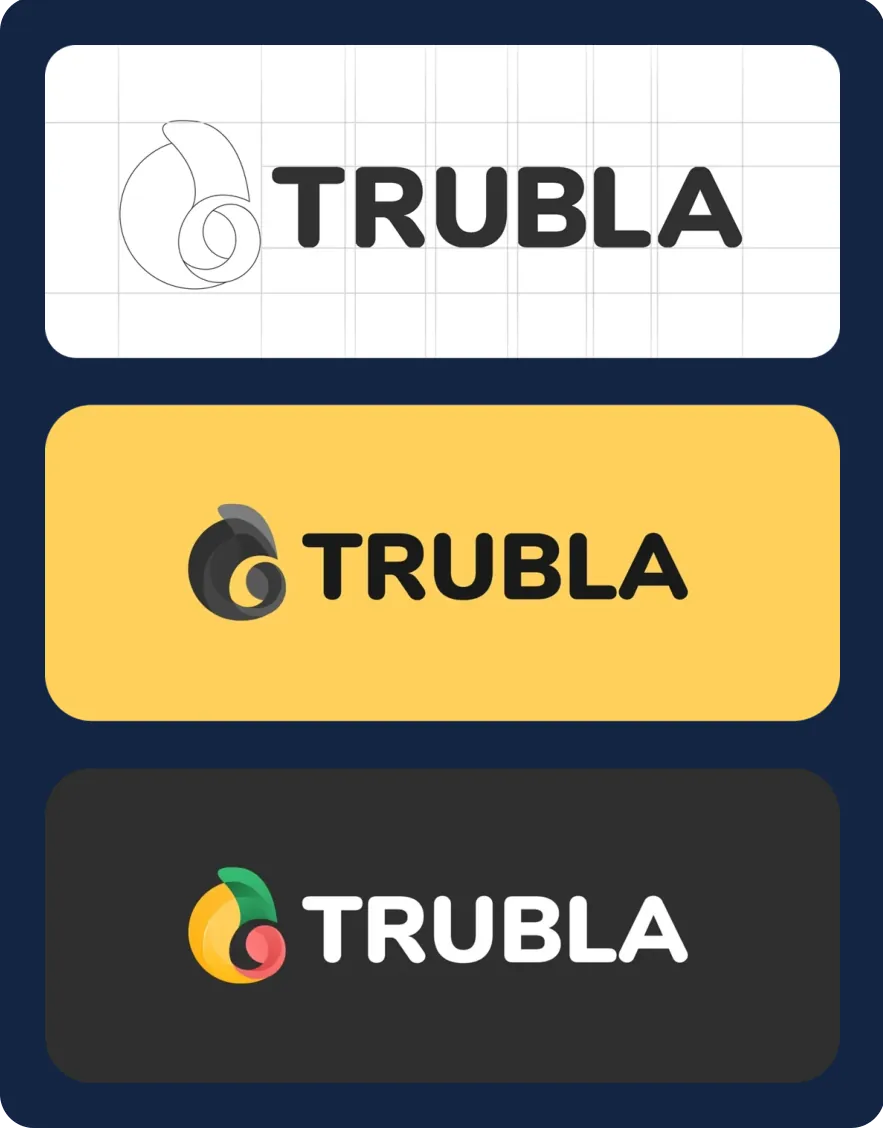
User flows, low-fidelity wireframes and a design system with reusable states and cross-platform behaviour, plus a brand identity inspired by the chameleon's ability to adapt.
What it solvedA cohesive experience across iOS, Android and web as features grew.
-
04
Architecture
Technical discovery and a modular, domain-driven, API-first architecture in which each capability evolves independently on a shared business foundation.
What it solvedNew capabilities added without major architectural changes.
-
05
Development
Sprint planning, technical refinement, API alignment and code reviews across native iOS, native Android, web and backend work.
What it solvedThree client apps kept aligned on one shared backend.
-
06
QA and launch
QA validation, regression testing, production releases, performance monitoring and continuous support after launch.
What it solvedA platform that kept shipping across a 12+ month partnership.
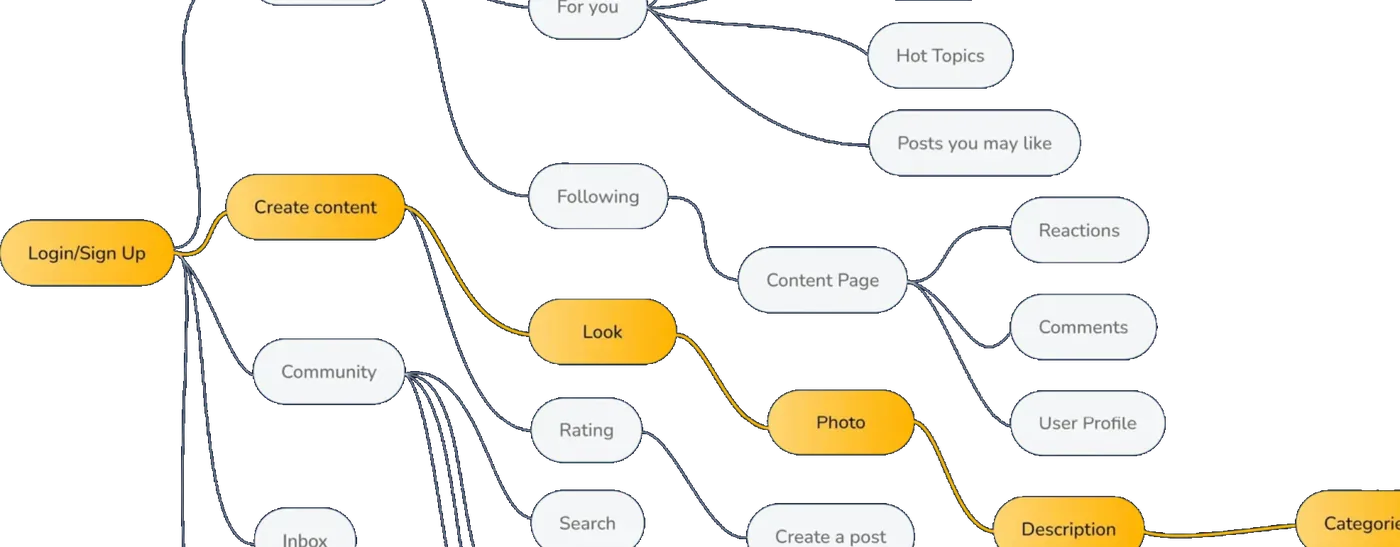
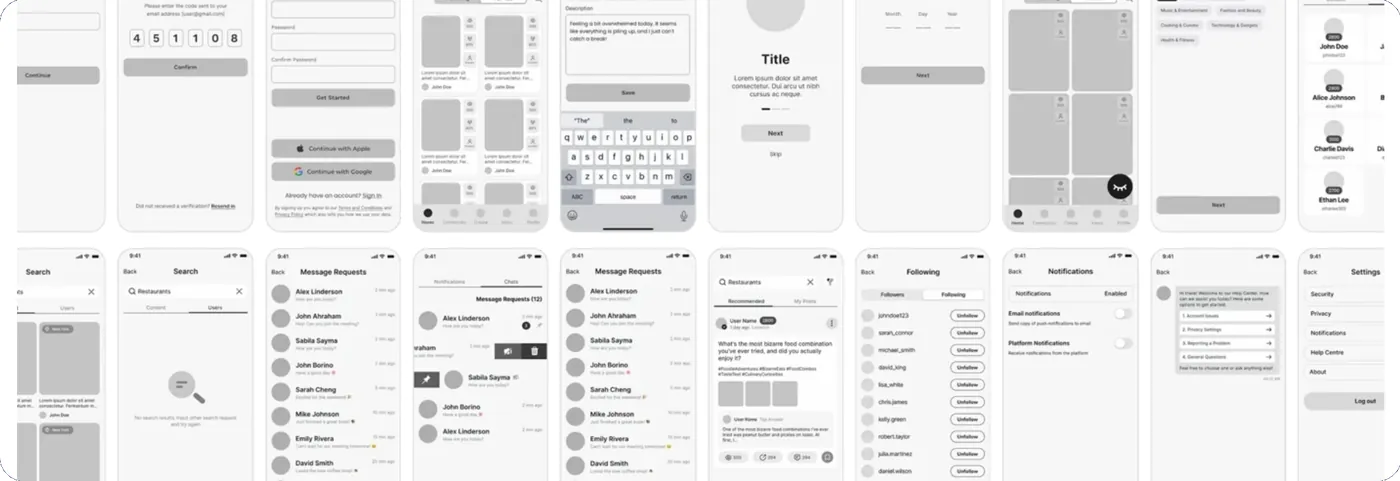
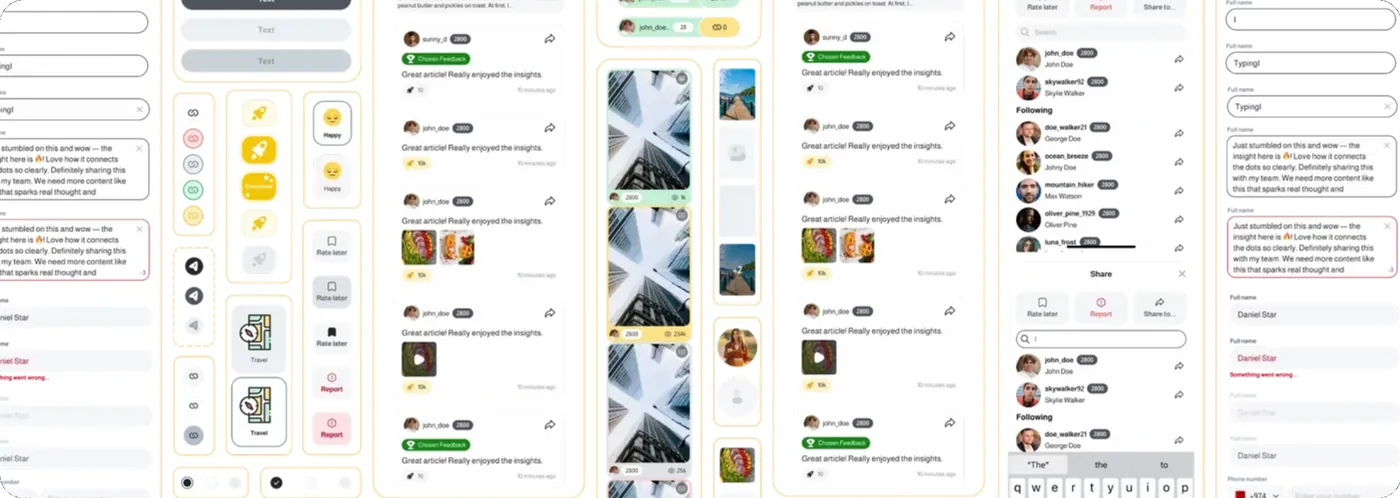
03 Our approach: design process
Flows, wireframes and a design system laid the groundwork.
04 The product
Creators share. Explorers discover. Signals connect them.
Two journeys feed each other: what creators publish becomes what explorers discover, and how explorers respond shapes reputation and future recommendations.
Explorer
Finds what to try next
Enter
Sign up, sign in or continue as a guest
Personalise
Choose categories of interest
Discover
Personal feed, trending and nearby
Evaluate
Ratings, comments and creator profile
Engage
Rate, comment, save and share
Ratings, reputation, location and behaviour signals feed the recommendation engine behind every feed
Creator
Builds trusted influence
Publish
Photos, rating, categories and tags
Engage
Answer requests and reply to comments
Grow
Reputation, followers and match score
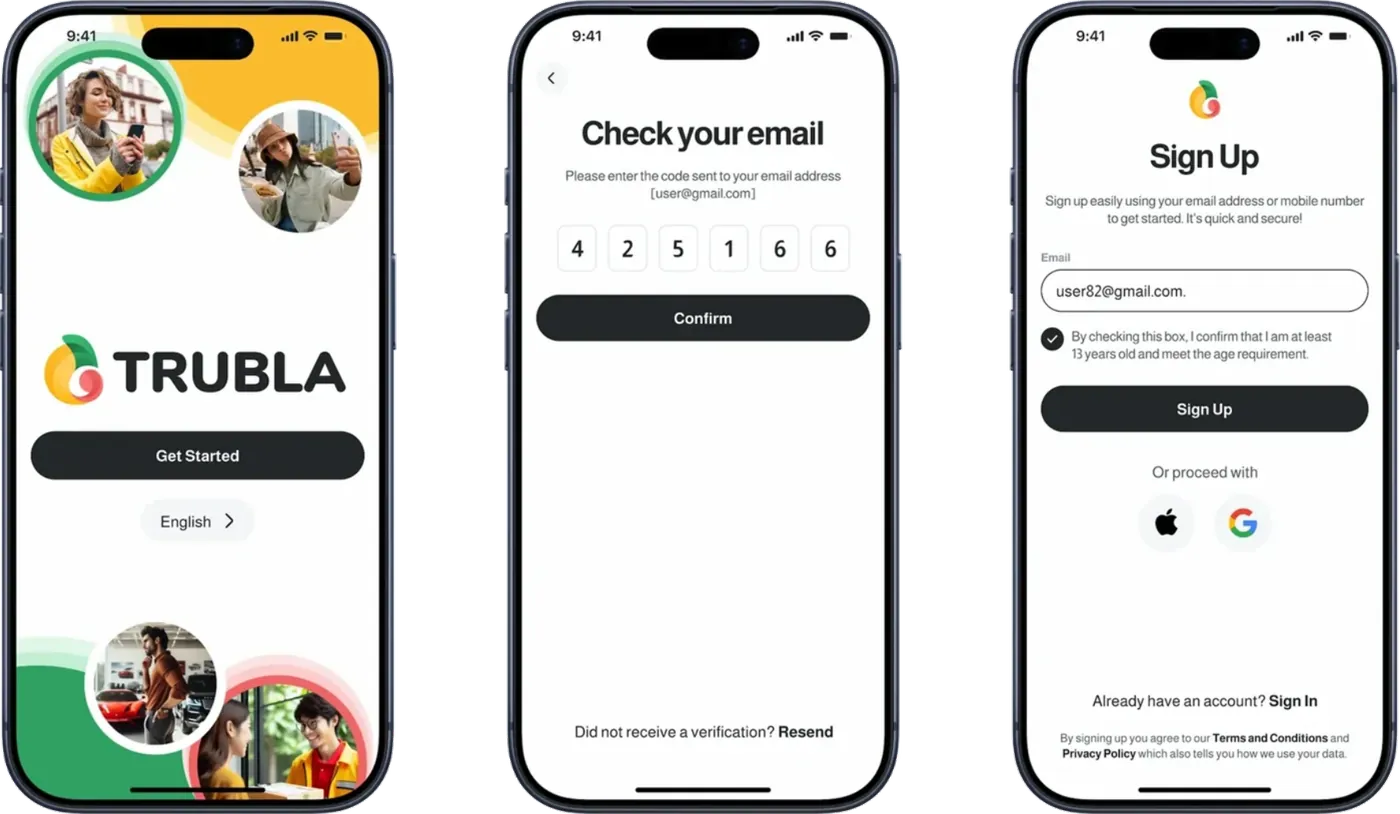
04 The product: key screens
Built around the actions users repeat most.
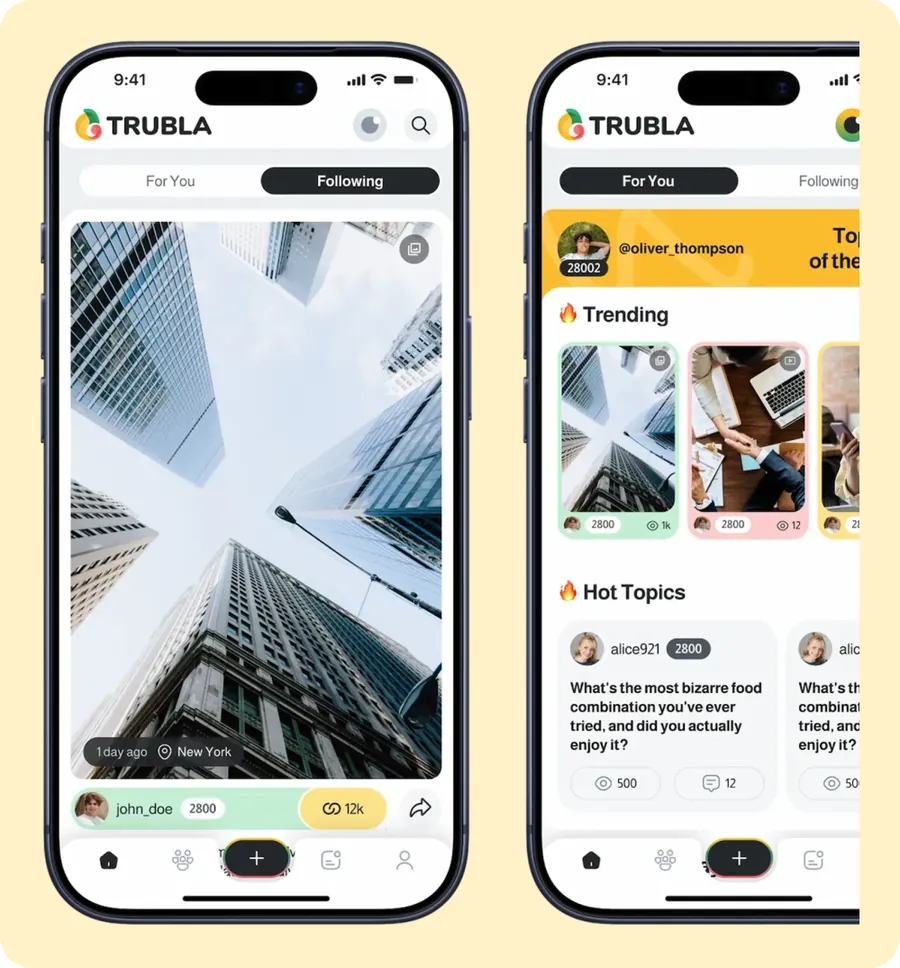
Home feed
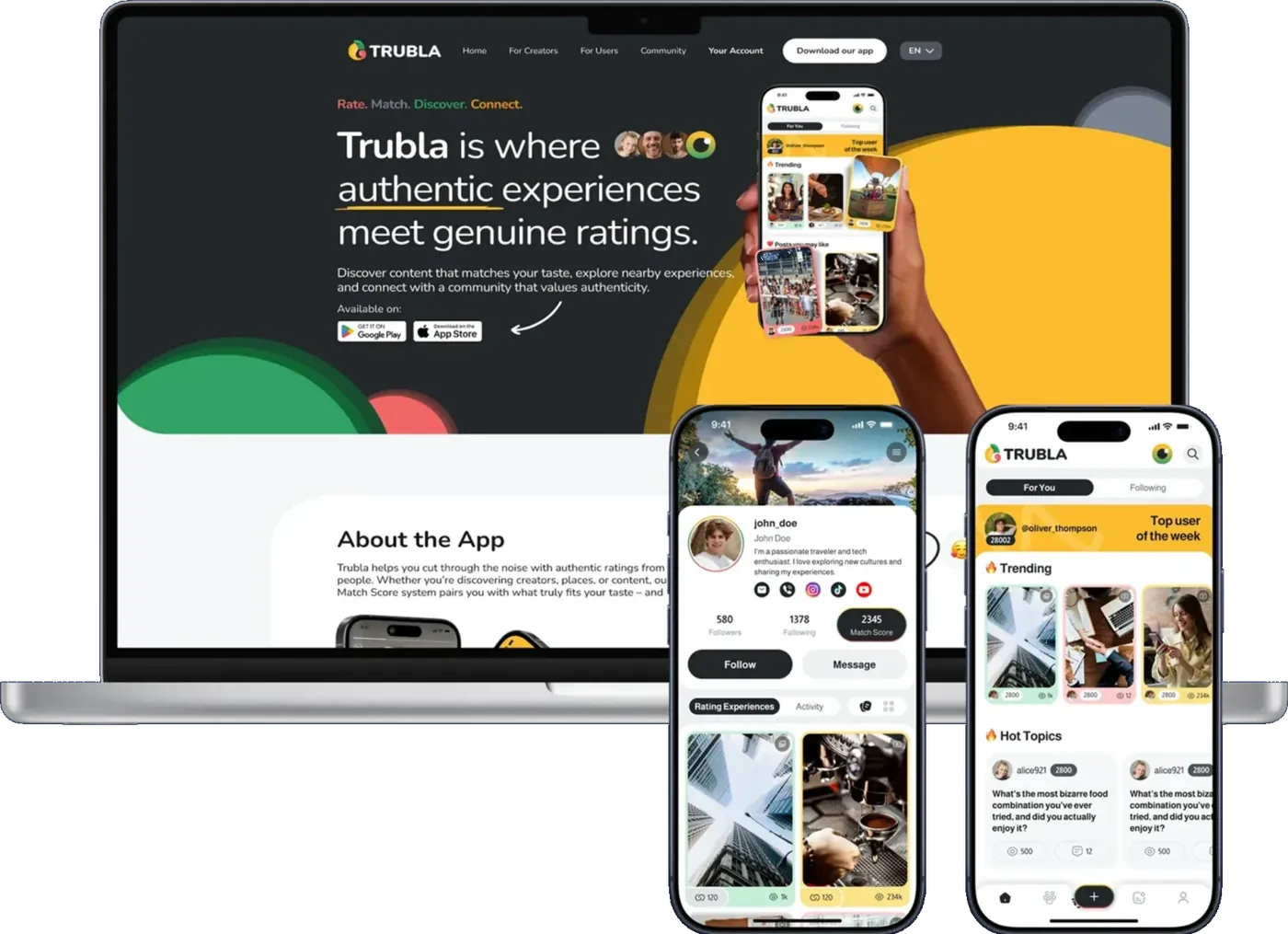
For You and Following feeds, trending posts and hot topics. The feed brings together location context, creator details and community signals, and is organised around opening posts, reacting, commenting, rating and sharing.
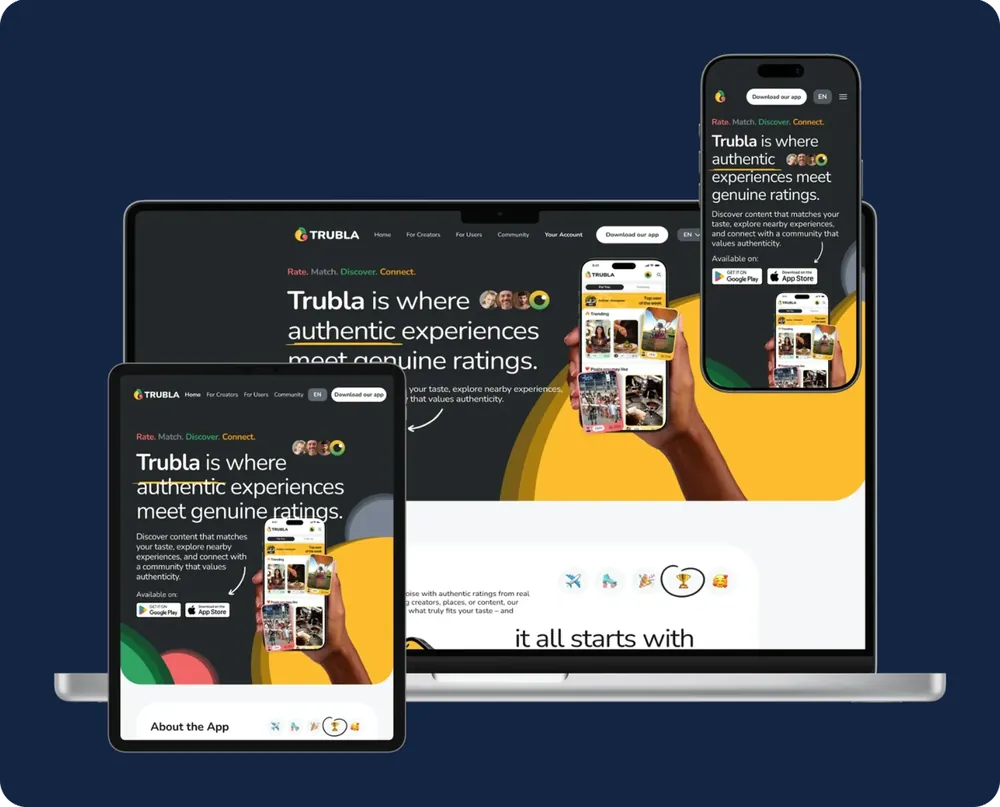
Web platform
A responsive web experience presents Trubla's core value, real experiences, honest ratings and community-driven discovery, on laptop, tablet and phone, and brings users toward the apps.
05 Engineering
One backend, many independent domains, three client apps.
A modular, domain-driven architecture lets each product capability evolve on its own while sharing the same business foundation. Every client talks to it through the same APIs.
Client apps
Three platforms
iOS
Swift, SwiftUI
Android
Kotlin, Jetpack Compose
Web
React, Next.js
Shared backend
Ruby on Rails
Independent business modules
7+ core domains and 20+ product modules on one platform
Data and services
PostgreSQL
Redis
Firebase
AWS
Amplitude
Analytics
Simplified view. Module labels reflect the platform capabilities described in the project documentation.
Independent modules
Discovery, messaging, publishing and safety can each change and scale without forcing changes elsewhere.
API-first clients
iOS, Android and web consume the same services, which keeps behaviour and data aligned across platforms.
Centralised operations
Moderation, administrative dashboards and analytics sit on the shared platform rather than inside any one app.
05 Engineering: stack and decisions
Technical choices for a community that keeps changing.
Technology stack
- iOS
- Swift, SwiftUI
- Android
- Kotlin, Jetpack Compose
- Web
- React, Next.js
- Backend
- Ruby on Rails
- Data
- PostgreSQL, Redis
- Cloud
- AWS, Firebase
- Analytics
- Amplitude behavioural analytics
- AI
- Recommendation engine and AI-assisted moderation
- Integrations
- Map integrations, geolocation services, push notifications; Apple and Google sign-in shown in the sign-up flow
- Delivery
- Sprint planning, API alignment, code review, regression testing, production releases, performance monitoring
Why these decisions were made
- 01
Domain-driven modules
Each capability evolves independently on a shared business foundation, so the platform can add features without major architectural changes.
- 02
API-first communication
Three client apps use the same backend services, keeping behaviour consistent across iOS, Android and web.
- 03
An independent recommendation engine
Ranking combines behavioural, contextual, reputation and location signals instead of relying on a chronological feed.
- 04
Trust and safety as infrastructure
Reporting, review workflows, blocking, AI-assisted moderation and admin dashboards are platform services, available to every client.
- 05
Analytics and localisation built in
Amplitude tracks behaviour to guide product decisions, and English and Arabic localisation is part of the foundation.
06 Key capabilities
Five capabilities that make the community work.
AI-assisted discovery
A recommendation engine surfaces relevant experiences from behavioural, contextual, reputation and location signals, across personalised feeds, trending experiences, hot topics and smart filters.
ValueExplorers find experiences that match their taste and context faster.
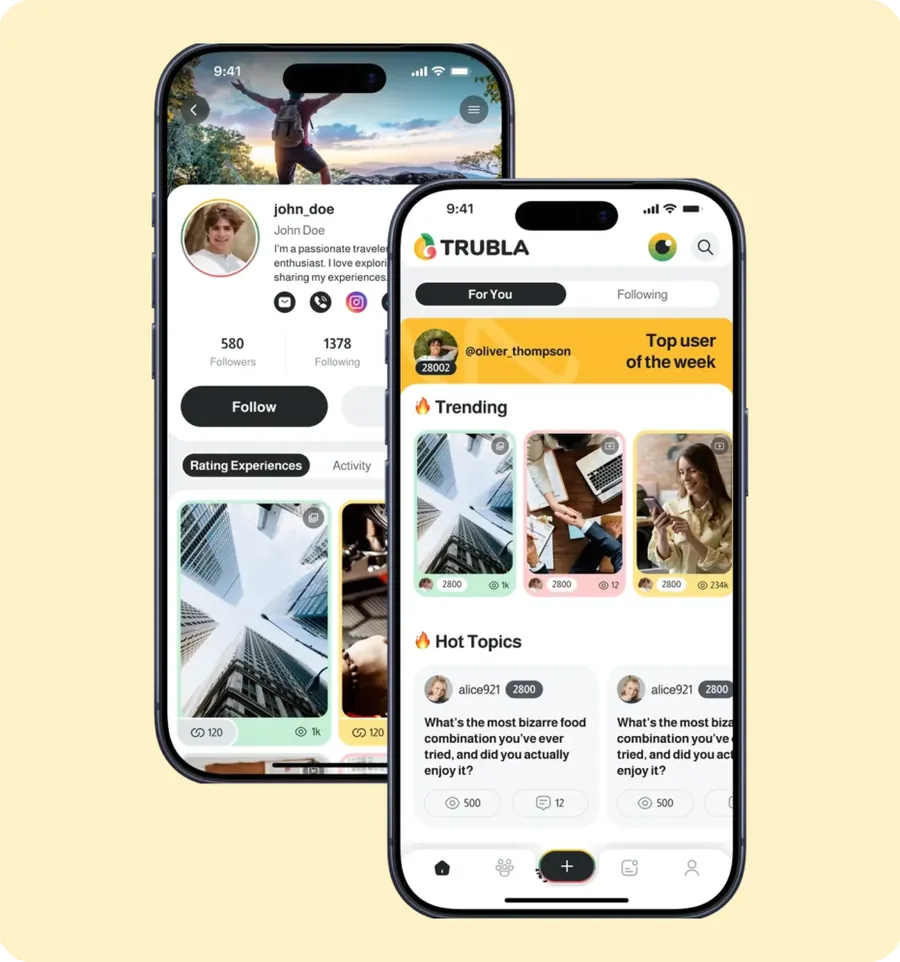
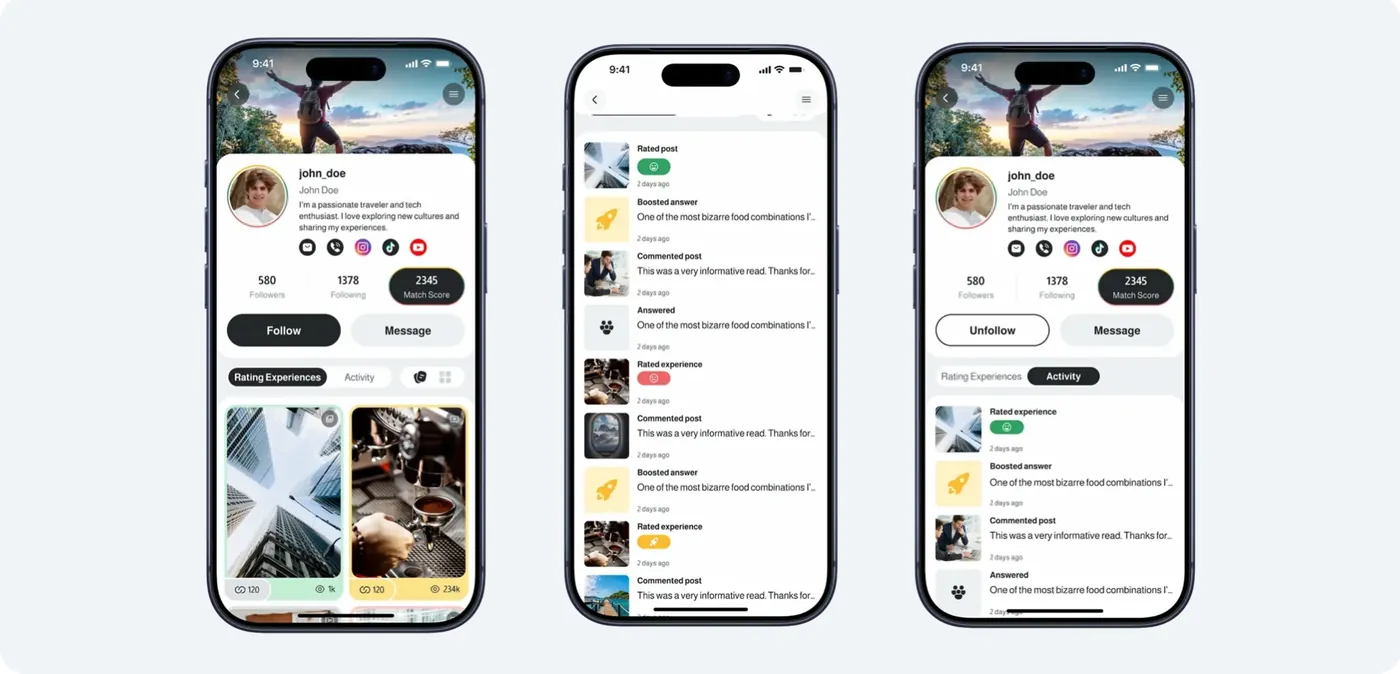
Community and identity
Personal and creator profiles, reputation, match score, following and privacy controls, all built on a shared identity domain.
ValueEvery recommendation has a visible person and track record behind it.
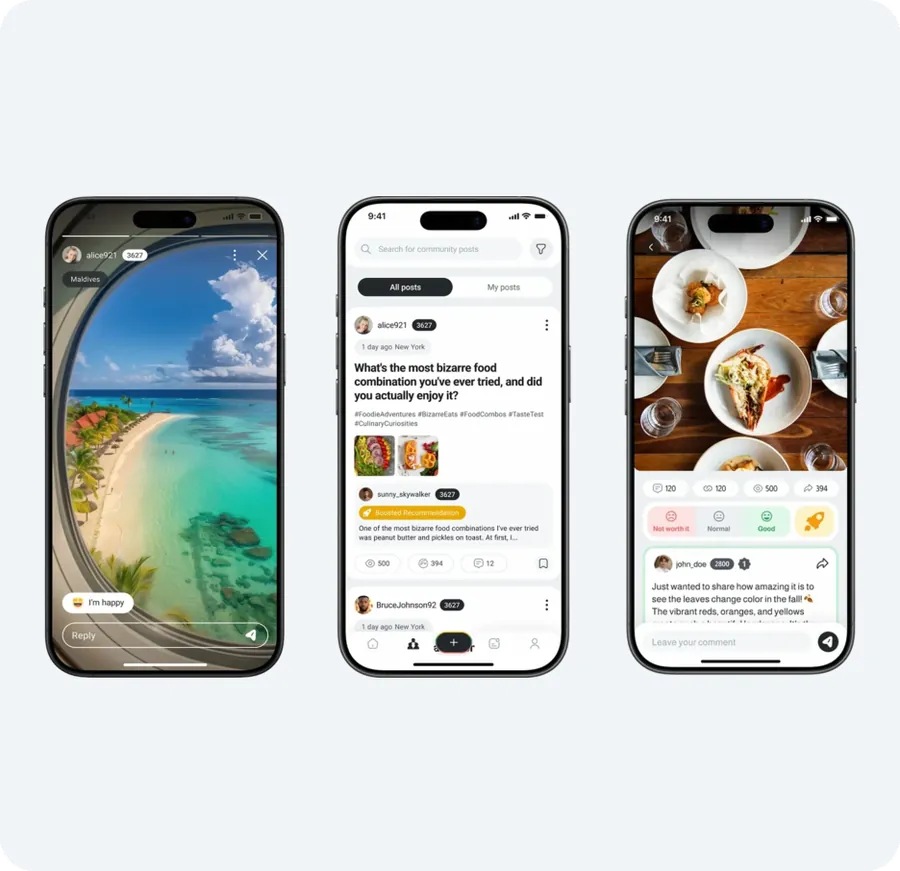
Experience sharing
Structured publishing with photos and media, ratings, categories and tags, drafts and comments, supported by media processing and content lifecycle management.
ValueAuthentic experiences are easy to create, organise and discuss.
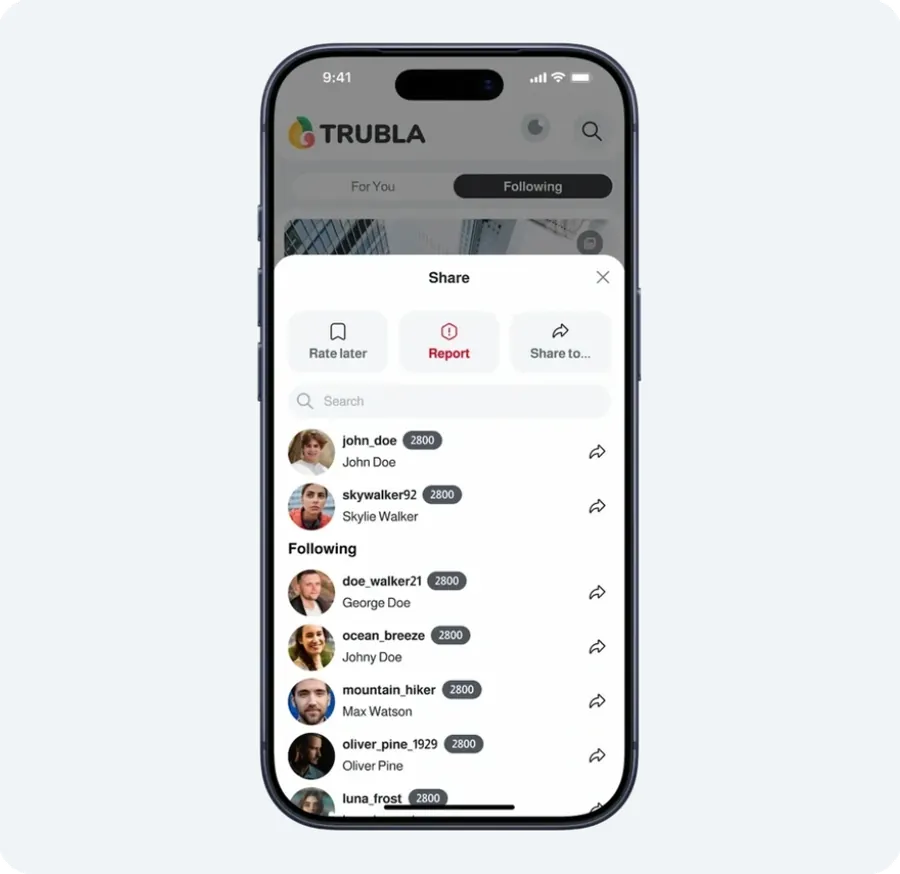
Trust and safety
Content reporting, review workflows, user blocking, AI-assisted moderation and administrative dashboards protect community quality as the platform grows.
ValueA healthier community that can scale without losing trust.
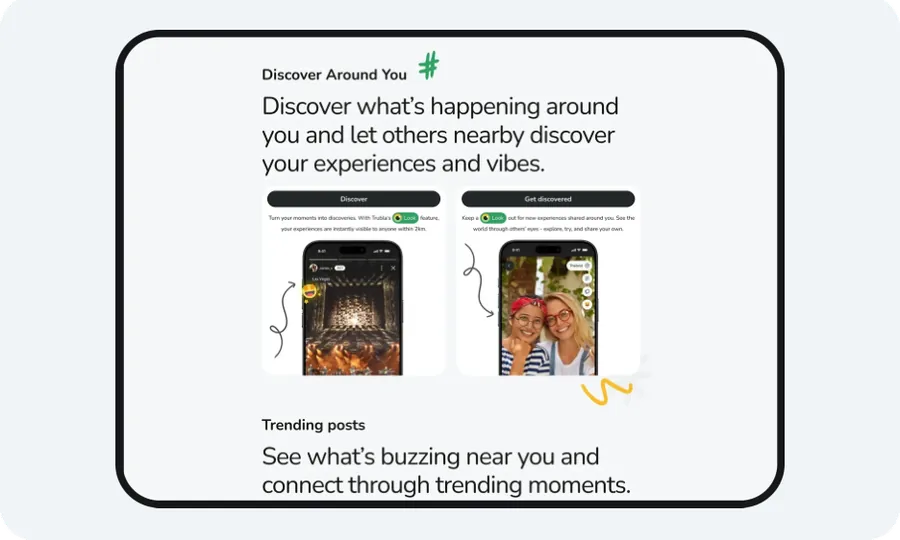
Location-aware discovery
Nearby experiences, interactive maps, geographic filters and contextual ranking connect users with what is happening around them.
ValueLocal recommendations that are relevant right now.
07 Results and impact
A multi-platform foundation built to evolve, not a fixed-feature MVP.
3
client applications, iOS, Android and web, running on one shared backend platform.
20+
Core product modules across the platform.
7+
Core business domains
Within the modular architecture
1
Shared backend platform
Connecting the whole product ecosystem
2
Native mobile apps
For iOS and Android
2
Supported languages
English and Arabic
9
Months to MVP
Discovery, design, build and QA
12+
Months of partnership
Including continuous support after launch
07 Results: delivery
Delivered end to end by an eight-person product team.
Delivery timeline
Platforms and deliverables
- Native iOS and Android apps
- React and Next.js web platform
- Ruby on Rails backend with administrative operations
- Brand identity and logo
- Responsive landing page, promotional video and marketing creatives
Project team
- 1 Project manager
- 1 UI/UX designer
- 2 KMM developers
- 2 Server developers
- 2 QA engineers
08 Why it worked
Five decisions behind the result.
- 01
Architecture mirrored the product
Seven-plus domains and 20+ modules on one backend let discovery, messaging, publishing and safety evolve independently.
- 02
Discovery was designed as the core loop
The feed was built around the actions users repeat most: exploring, opening posts, reacting, commenting, rating and sharing.
- 03
Trust was made visible
Profiles bring together identity, activity, shared experiences and match score, so users can see who stands behind each opinion.
- 04
Entry stayed flexible
Users can sign up, sign in or look around as a guest, while the product shows what full access unlocks.
- 05
Safety and measurement live in the platform
Moderation workflows and behavioural analytics are shared services, supporting community quality and product decisions across every client.
Trubla worked because its architecture reflected its product. Each area users care about became an independent module on one shared backend, which let three client apps reach MVP in nine months and keep evolving through a 12+ month partnership.

Have a product idea?
Digital Growth Labs is a product design and engineering partner. We take complex product ideas from concept to launch.
New business
Online
Offices
- 1563 McClure Woodland CA 95776
Trubla was delivered by Digital Growth Labs as white-label engineering partner to URLaunched (You are launched), where the project is also published. Project facts and figures in this document come from that published case study.