
HIPAA compliant app development
Patient Data Protection
HIPAA compliant app development
In healthcare, maintaining strict adherence to regulatory standards is as vital as a steady pulse in an emergency room. It is essential for securing personal health data, representing a critical responsibility for medical software engineering teams.
We provide comprehensive guidance on achieving regulatory compliance and ensuring your application is secure, reliable, and fully aligned with essential patient data protection mandates.

Regulatory Standards
The basics of healthcare compliance for software development
Any medical application that handles confidential patient records—whether through intake, transmission, or processing—must rigorously follow established health data privacy protocols. This means adhering to the standards defined under the Health Insurance Portability and Accountability Act.
Compliance involves implementing technical safeguards such as encrypting digital records, ensuring data integrity, and strictly controlling user access permissions while maintaining continuous risk assessment procedures.

Data Governance
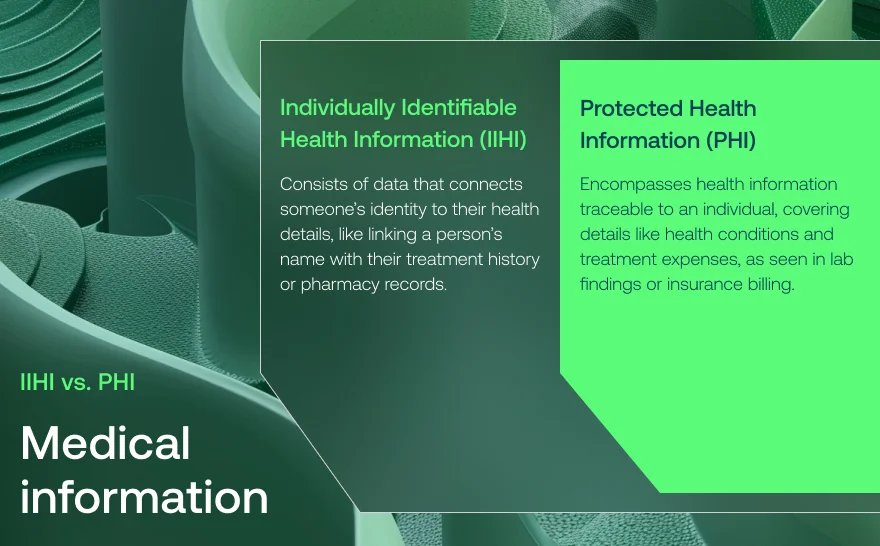
What kind of information is subject to regulation?
For software engineering teams on the path to regulatory compliance, understanding the exact nature of the data processed by your application is vital.
- Individually Identifiable Health Information identifying specific individuals
- Protected Health Information generated or revealed during medical services
- Detailed medical record identifiers and insurance payment details

Everything you need to know about healthcare compliance standards
Navigating regulatory frameworks requires a thorough grasp of privacy rules, security safeguards, and proper administrative protocols.
Non-compliance risks severe legal ramifications, financial penalties, and a damaging loss of trust among patients and healthcare providers alike. It underscores the importance of embedding security guidelines directly into the architecture and maintenance lifecycle of any medical software solution.
Modern regulatory updates continually expand privacy protections, emphasizing the need for robust data governance, secure hosting environments, and meticulous audit logging across all digital health touchpoints.
Need expert advice on compliance for your healthcare application?
Let our knowledgeable healthcare consultants guide you through the maze of compliant technology solutions, helping you establish robust technical safeguards and streamline your path to secure operations.
Core Development Guidelines
Choose the right vendor
Prioritize partners with a demonstrated healthcare sector history, robust data encryption standards, and readiness to sign Business Associate Agreements.
Determine timeline & budget
Understand the scope and investment required for building minimum viable products, from telemedicine platforms to comprehensive EHR systems.
Assemble a skilled team
Bring together specialized legal consultants, software architects, security analysts, and developers who understand regulatory requirements.
Implement encryption
Protect sensitive health information in storage and transmission using advanced cryptographic protocols and secure transport layers.
Establish audit trails
Create detailed logs to track access, modifications, failed attempts, and security alerts across the entire software infrastructure.
Development Estimates Overview
Explore general estimates for different types of healthcare software projects, highlighting typical timelines and resource allocations.
| Solution Type | Initial Scope | Timeline | Complexity |
|---|---|---|---|
| Telemedicine platform | Core features | Short term | Moderate |
| EHR system | Enterprise grade | Long term | High |
| Patient portal | Standard web | Medium term | Moderate |
FAQs

What makes an application subject to healthcare privacy regulations?
Any software that stores, processes, or transmits individually identifiable health information or protected health information on behalf of a covered entity or business associate must comply with these regulatory standards.
What technical safeguards are required for secure health applications?
Essential technical safeguards include data encryption at rest and in transit, robust access controls, unique user identification, automatic logoff mechanisms, and comprehensive audit trail generation.
Why is a Business Associate Agreement necessary?
A Business Associate Agreement is a legal contract that establishes permitted and required uses of protected health information, ensuring that third-party technology vendors assume liability for safeguarding patient data.
How do audit logs contribute to compliance?
Audit logs record all activity related to sensitive health records, including who accessed data, when it was viewed or modified, and any failed authentication attempts, enabling proactive security monitoring.
What happens in the event of a data security breach?
Regulated entities must follow strict incident response protocols, which include investigating the incident, containing the vulnerability, and notifying affected individuals and regulatory authorities as mandated.
How can engineering teams integrate security without slowing down delivery?
By adopting secure coding practices early in the software development lifecycle, automating compliance checks within CI/CD pipelines, and collaborating closely with specialized security analysts.
get in touch
Let's Start a Conversation
Have a project in mind? We'd love to hear about it. Fill out the form and our team will get back to you within 24 hours.
Address
1563 McClure Woodland ca 95776
John@digitalgrowthlab.org
Phone
+1 7866924887
Response Time
Within 24 hours