
AI in medical imaging
AI in Medical Imaging
Transforming healthcare through advanced artificial intelligence
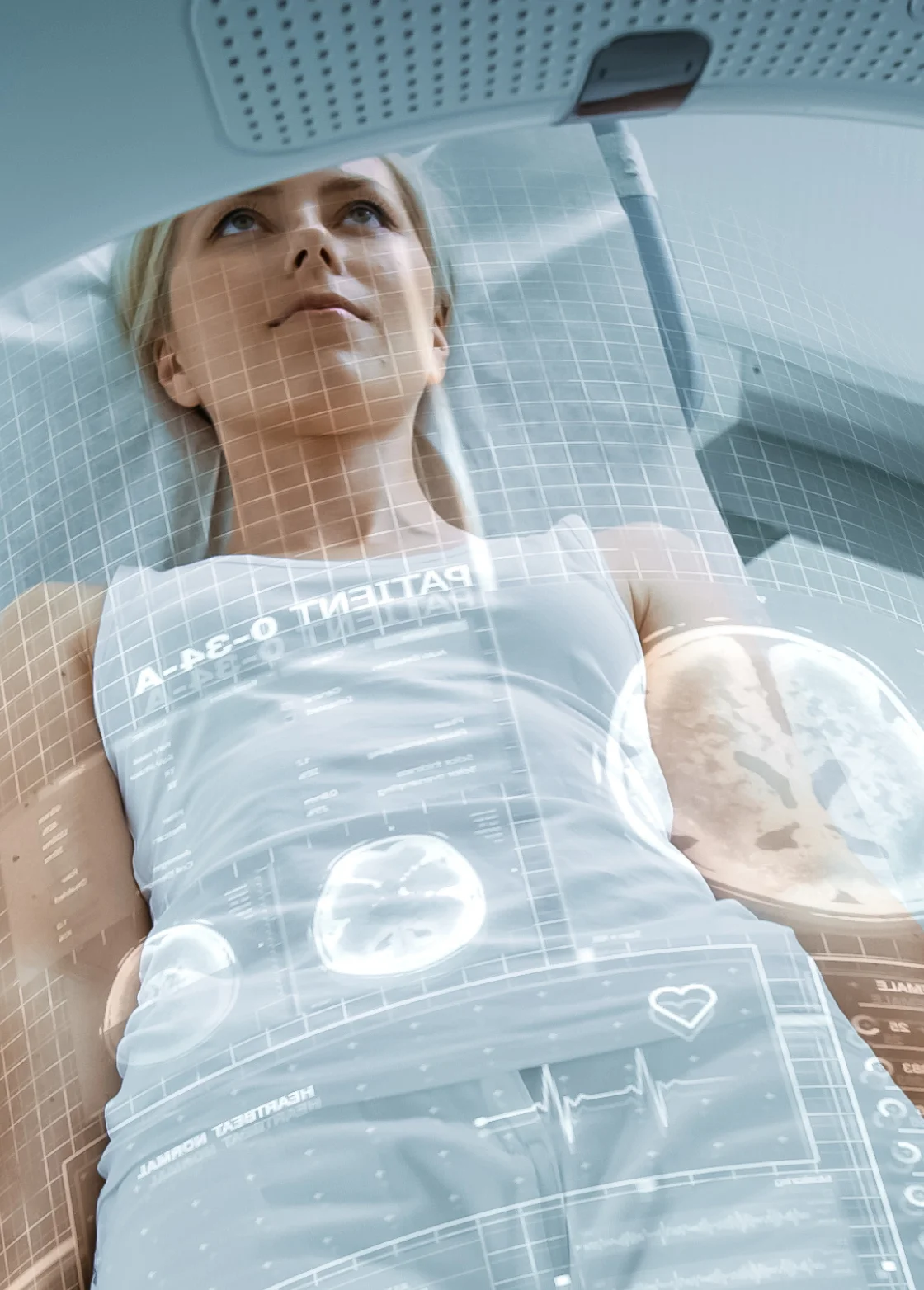
Artificial intelligence in healthcare is much more than a supplementary tool. It is fundamentally transforming how medical professionals approach medical imaging by enabling faster image analysis, earlier and more accurate detection of abnormalities, and precision treatment plans tailored to each individual patient.
Advanced algorithms empower radiologists and clinical specialists to review scans with greater clarity, revealing critical insights that might otherwise go unnoticed during routine visual inspections.
Addressing Industry Demands
The growing need for AI-driven diagnostic solutions
Global healthcare systems face critical shortages of radiology specialists, leading to heavy workloads and increased pressure on clinical teams. As demand continues to outpace available supply, artificial intelligence emerges as a vital solution to support diagnostic workflows.
By leveraging deep learning and machine learning techniques, modern software can analyze visual representations of body organs like X-rays, CT scans, and MRIs, helping clinical teams maintain high standards of diagnostic accuracy and operational efficiency.

Key Capabilities
Core functionalities of medical imaging software
Modern artificial intelligence applications offer specialized features designed to streamline clinical operations and assist practitioners in everyday decision-making.
- Automated computer-aided diagnosis systems that detect early abnormalities
- Precise semantic and instance image segmentation for isolated structures
- Workflow optimization features that prioritize urgent clinical cases

Everything you need to know about AI in medical imaging
Understanding how intelligent software integrates into diagnostic workflows, addressing challenges, and elevating patient care.
Implementing artificial intelligence within clinical environments requires careful planning around data quality, security standards, and seamless integration with existing hospital infrastructure. Software development teams work closely with healthcare providers to build compliant, robust tools that fit naturally into daily routines.
From automated reporting and protocoling to quantitative biomarker extraction, these technologies reduce administrative friction so that physicians can dedicate more time to direct patient care and complex treatment planning.
Ensuring Security and Compliance
Building healthcare applications demands strict adherence to regulatory frameworks such as HIPAA and GDPR. Robust encryption, role-based access controls, and de-identification protocols protect sensitive patient data while supporting advanced machine learning research and clinical deployment.
Key Capabilities in Detail
Computer-Aided Diagnosis
Systems trained on vast image databases to automatically detect and highlight potential areas of concern at early stages.
Image Segmentation
Computer vision techniques that isolate specific structures within images for precise quantitative analysis and object recognition.
Workflow Optimization
Streamlining administrative tasks through automated protocoling, image reconstruction, and intelligent case triage.
Quantitative Analysis
Automatically measuring lesion sizes, tissue density, and organ volume to provide objective insights for treatment planning.
Disease Monitoring
Analyzing longitudinal imaging data to detect subtle changes in disease states and support early medical interDigital Growth Labs.
Comparison of AI Capabilities
An overview of how different technological approaches address specific medical imaging tasks and clinical requirements.
| Capability | Primary Focus | Data Modality | Core Benefit |
|---|---|---|---|
| Computer-Aided Diagnosis | Anomaly detection | X-Ray and CT Scans | Early identification |
| Image Segmentation | Structure isolation | MRI and Ultrasound | Precise measurement |
| Workflow Triage | Case prioritization | Emergency scans | Faster urgent care |
FAQs

How does artificial intelligence assist radiologists in daily workflows?
Artificial intelligence assists radiologists by automating routine tasks such as image protocoling, generating structured preliminary reports, and flagging potential abnormalities. This helps clinical teams prioritize urgent cases and reduces time spent on administrative burdens.
What imaging modalities are compatible with modern AI software?
Modern algorithms can process a wide variety of medical imaging modalities, including standard X-rays, computed tomography (CT) scans, magnetic resonance imaging (MRI), ultrasound images, and fluoroscopy feeds.
How do AI systems handle patient data privacy and security?
Systems ensure security through strict data de-identification, role-based access control, multi-factor authentication, and end-to-end encryption. Solutions are engineered to comply with healthcare regulations like HIPAA and GDPR.
Can AI tools integrate with existing electronic health record systems?
Yes. Custom software integration utilizes industry standards like DICOM protocols and open application programming interfaces (APIs) to ensure seamless data exchange with existing hospital infrastructure and EHR platforms.
What is the difference between semantic and instance segmentation?
Semantic segmentation classifies every pixel in an image into specific categories to analyze regions, whereas instance segmentation assigns unique tags to distinct individual objects when multiple items appear close together.
How is the performance of medical imaging models validated?
Performance is validated through diverse clinical trials, adherence to reporting standards, independent third-party evaluations, and testing across varied demographic datasets to ensure generalizability in real-world practice.
get in touch
Let's Start a Conversation
Have a project in mind? We'd love to hear about it. Fill out the form and our team will get back to you within 24 hours.
Address
1563 McClure Woodland ca 95776
John@digitalgrowthlab.org
Phone
+1 7866924887
Response Time
Within 24 hours