
Blockchain software development
Blockchain Software
Blockchain solutions for forward-thinking businesses
We leverage blockchain technology for solutions that make company operations more efficient and pave the way for game-changing innovation. Increase your revenue and prepare your organization for the digital economy of the future.
Once a little-known building block for cryptocurrency, blockchain is becoming core to banking and finance, and it is finding applications in just about every industry, from accounting to real estate.
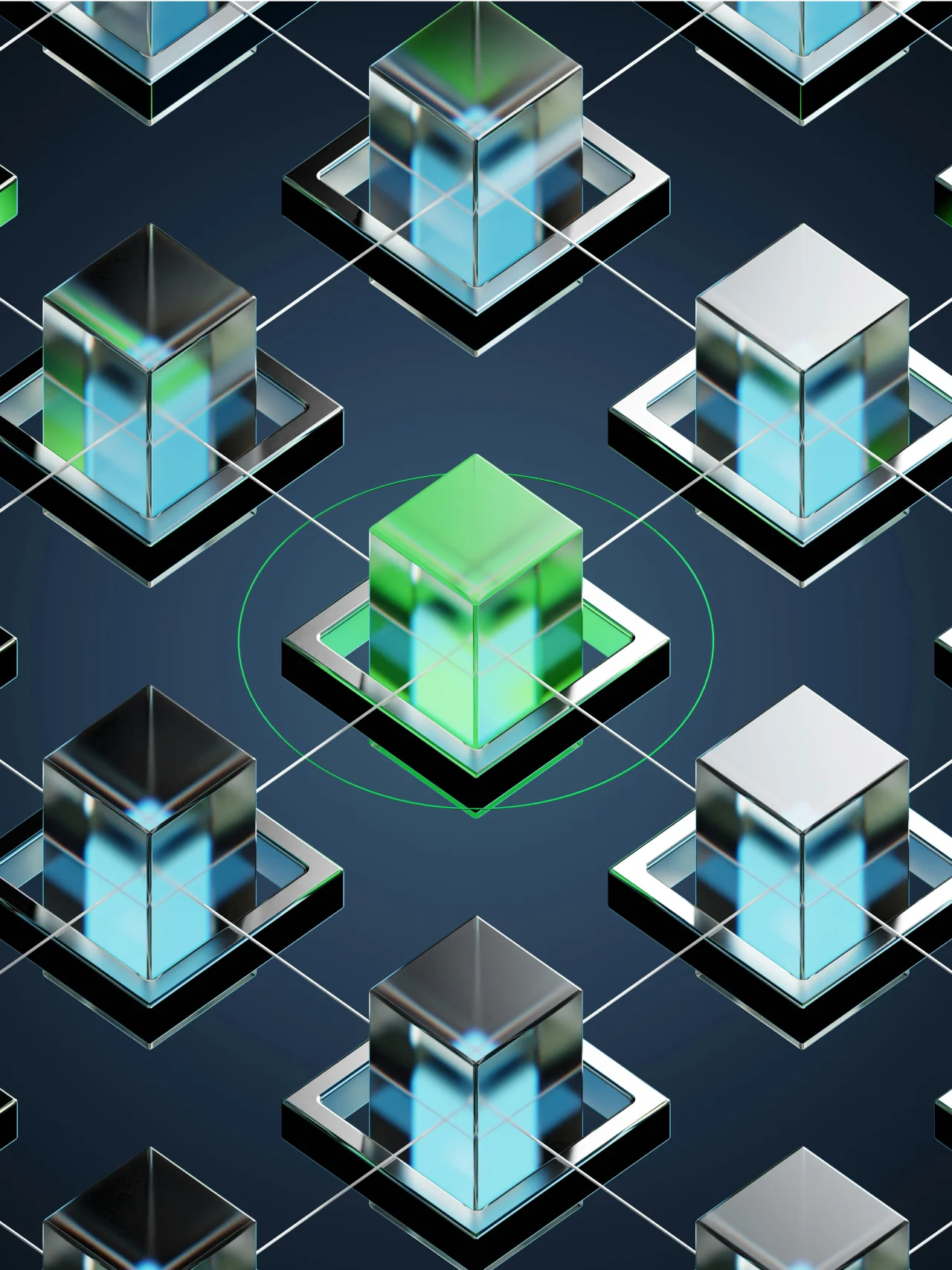
Core Benefits
What to expect from your blockchain solution
By partnering with experienced developers, you can focus on high-level business concerns while our team handles the technical details of implementing your blockchain project with speed and security.
Distributed ledger technology provides structural advantages that transform how organizations handle data, agreements, and transactions across complex networks.

Key Advantages
Built for security and efficiency
Explore the primary architectural benefits that make blockchain a transformative choice for modern enterprise applications.
- Enhanced security features to mitigate concerns around data privacy and infrastructure control.
- Improved traceability through peer-to-peer validation networks that deter data tampering.
- Greater scalability by establishing a single source of truth to streamline complex workflows.
- Lower operational overhead costs by reducing the need for intermediaries and manual verifications.

Everything you need to know about blockchain development
Comprehensive software services designed to secure digital assets, automate workflows, and integrate decentralized architecture.
Our approach to blockchain engineering focuses on aligning technology stacks with your strategic business goals. Whether you require bespoke decentralized applications or enterprise ledger integrations, our engineers deliver scalable solutions.
We guide you through public, private, and hybrid deployment models to ensure your infrastructure matches your exact privacy, speed, and regulatory requirements.

Architectural flexibility
Choosing the right blockchain framework requires careful evaluation of consensus mechanisms, transaction throughput, and data visibility needs. We help you navigate these architectural decisions to build robust, future-proof platforms.
Our blockchain services
Custom App Development
Full-cycle development to deliver products that help you secure transactions, control digital assets, and protect your entire ecosystem.
Smart Contracts
Automate agreements when preset conditions are met, streamlining services and deterring fraudulent transactions.
Wallets & Exchanges
Craft and tailor secure, user-friendly cryptocurrency wallets and exchange applications paired with reliable support.
Decentralized Apps (dApps)
Deploy decentralized applications for clients interested in cryptocurrency, advanced supply chain tracking, and disintermediation.
NFT Solutions
Convert digital assets into unreplicable non-fungible tokens and receive expert guidance on deployment strategies.
Blockchain deployment approaches
Compare our core implementation strategies to determine which network model best suits your operational goals and security needs.
| Model Type | Decentralization | Access Level | Primary Use Case |
|---|---|---|---|
| Public Blockchain | High | Permissionless | Large-scale public networks |
| Private Blockchain | Controlled | Permissioned | Enterprise data privacy |
| Hybrid Blockchain | Balanced | Customizable | Verified private transactions |
FAQs

What industries benefit most from blockchain software development?
Blockchain delivers significant advantages to financial services, healthcare, real estate, education, Internet of Things (IoT), supply chain logistics, and gaming by increasing transparency, security, and operational efficiency.
How do smart contracts improve business workflows?
Smart contracts automatically execute agreements when predetermined conditions are met without requiring intermediaries. This reduces administrative overhead, accelerates transaction speeds, and minimizes the risk of human error or fraud.
What is the difference between public and private blockchains?
Public blockchains are open and permissionless, allowing anyone to join and participate in consensus. Private blockchains are permissioned networks where access is restricted, making them ideal for enterprises requiring strict data privacy and compliance.
How does blockchain enhance data security?
Blockchain utilizes cryptographic hashing and decentralized peer-to-peer validation. Once data is recorded to a block, it cannot be altered retroactively without altering all subsequent blocks, making tampering immediately detectable.
Can blockchain be integrated with existing enterprise software?
Yes. Blockchain solutions can be integrated with existing cloud storage, enterprise resource planning (ERP) systems, and legacy databases through secure APIs and custom middleware connectors.
What factors should be considered when planning a blockchain project?
Key factors include defining the specific problem blockchain solves, selecting the appropriate network model public, private, or hybrid, evaluating scalability requirements, ensuring regulatory compliance, and choosing the right consensus mechanism.
get in touch
Let's Start a Conversation
Have a project in mind? We'd love to hear about it. Fill out the form and our team will get back to you within 24 hours.
Address
1563 McClure Woodland ca 95776
John@digitalgrowthlab.org
Phone
+1 7866924887
Response Time
Within 24 hours