
Microservices Engineering
Long-term control up
Microservices engineering and modernization
With custom software development experience, Digital Growth Labs designs, modernizes, and scales systems using microservices architecture. Our team defines clear service boundaries, implements independent services, and establishes the operational foundations required to run distributed systems reliably in production, even as complexity increases over time.

microservices adoption
When microservices adoption is justified
Microservices are effective when independent delivery and uneven scaling are core system requirements. They are especially relevant when an existing architecture has become a constraint, or when delivery, reliability, and scaling pressures are expected and must be built into the system from the start.
Increased Product Complexity: Microservices isolate functionality into independent services, reducing the impact of changes, limiting failures, and making complex products easier to scale and maintain.
Mounting Technical Debt: Microservices support gradual modernization by allowing legacy components to be replaced or improved individually without disrupting the entire system.
Different Development Speeds: Independent services allow teams to develop, test, and deploy different parts of a system at their own pace, reducing release coordination and operational overhead.
Compliance Requirements: Microservices create clear boundaries for data access, security, and regulatory requirements, making it easier to apply different compliance rules across services and regions.

Microservices cases
Microservices use cases Digital Growth Labs supports
Digital Growth Labs supports microservices initiatives across all primary use cases:
- Engineering production-ready microservices.
- Migrating legacy systems to microservices through our legacy app modernization practice.
- Scaling existing platforms where independent delivery and uneven load are core requirements.
- Isolating critical functions for regulated and enterprise platforms.
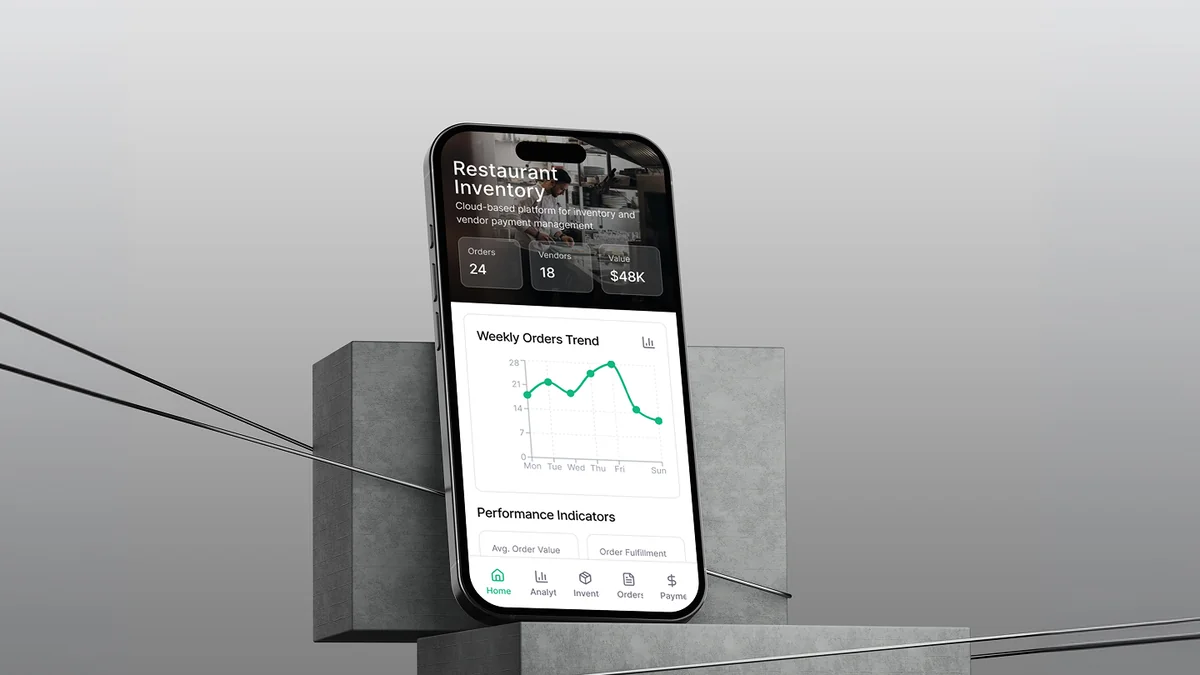
What to expect when you build, microservices with Digital Growth Labs
Clean Code
Maintain clear, readable, and testable code with well-defined responsibilities and disciplined dependencies to keep microservices easy to modify and maintain.
Reliable Integration
Design robust API, event, and messaging integrations with clear contracts, appropriate communication patterns, and reliable error-handling strategies.
Business-Focused Customization
Define service boundaries, data ownership, and workflows around your specific business processes rather than forcing your system into a generic architecture.
High-Load Stability
Build resilient microservices with rate limiting, resource isolation, scaling, timeouts, retries, and load-shedding to maintain reliability under heavy traffic.
Observability
Use logging, metrics, and distributed tracing to monitor system health, identify issues quickly, and understand their impact across interconnected services.
AI-Enabled Development
Leverage AI for code generation, automated testing, and intelligent code reviews to reduce manual effort, identify issues early, and improve development efficiency.
Comprehensive Testing
Combine automated and targeted manual testing across APIs, integrations, and critical workflows to prevent regressions and maintain reliable service delivery.
Technology stack and the infrastructure for microservices
Microservices do not succeed on code quality alone. They require deliberate architectural choices, reliable infrastructure, and disciplined DevOps practices.
| Capability | Technology Stack | How We Deliver |
|---|---|---|
| Programming Languages & Frameworks |
|
We select programming languages and frameworks based on each service's responsibilities, performance requirements, latency, memory usage, and overall stability. |
| Containerization & Orchestration |
|
We standardize containers and define how services run, scale, communicate, and recover from failures. We also manage traffic, health checks, and rollout strategies for predictable production performance. |
| Continuous Integration / Delivery (CI/CD) |
|
We build per-service CI/CD pipelines with API contract testing, progressive deployment strategies, canary releases, and fast rollback paths to support independent and reliable deployments. |
| API Management |
|
We define API contracts and gateway policies covering versioning, routing, rate limiting, and backward compatibility so services can evolve without disrupting dependent systems. |
| Service Communication |
|
We establish event-driven or direct service-to-service communication patterns based on your requirements for consistency, latency, scalability, and reliability. |
| Observability & Monitoring |
|
We implement end-to-end request tracing, service health monitoring, and performance metrics to detect cascading failures and understand their impact across distributed systems. |
| Security & Access Management |
|
We establish secure service identities, trust boundaries, and access policies with service-to-service authentication, least-privilege access, and secure secrets management. |
| Testing & Quality Assurance |
|
We combine unit, API, contract, integration, and end-to-end testing to continuously validate service behavior and enable safer refactoring and deployment. |
| Data Integrity |
|
We define clear data ownership, consistency models, and synchronization patterns to keep distributed data reliable, accurate, and predictable. |
FAQs

How do you guarantee that the system won’t become more difficult to maintain?
We design microservices with clear service boundaries, clean code, automated testing, and strong observability to keep the system maintainable as it grows. We also document architecture decisions and continuously monitor system performance to prevent technical debt from accumulating.
Do you just code or architect the system?
We do both. Our team helps define the overall architecture, service boundaries, technology stack, APIs, data ownership, and communication patterns before implementing and evolving the solution.
What cooperation models do you offer?
We offer flexible engagement models including consulting, dedicated development teams, staff augmentation, and project-based development. We tailor the model to your project scope, technical requirements, timeline, and internal team structure.
How risky is monolith-to-microservices migration?
Migration can be complex, but the risk can be significantly reduced through an incremental approach. We identify service boundaries, prioritize critical components, and migrate functionality step by step while keeping the existing system operational and continuously testing each transition.
get in touch
Let's Start a Conversation
Have a project in mind? We'd love to hear about it. Fill out the form and our team will get back to you within 24 hours.
Address
1563 McClure Woodland ca 95776
John@digitalgrowthlab.org
Phone
+1 7866924887
Response Time
Within 24 hours