Waste logistics marketplace · U.S. logistics startup
Turning phone-based waste hauling into a real-time digital marketplace.
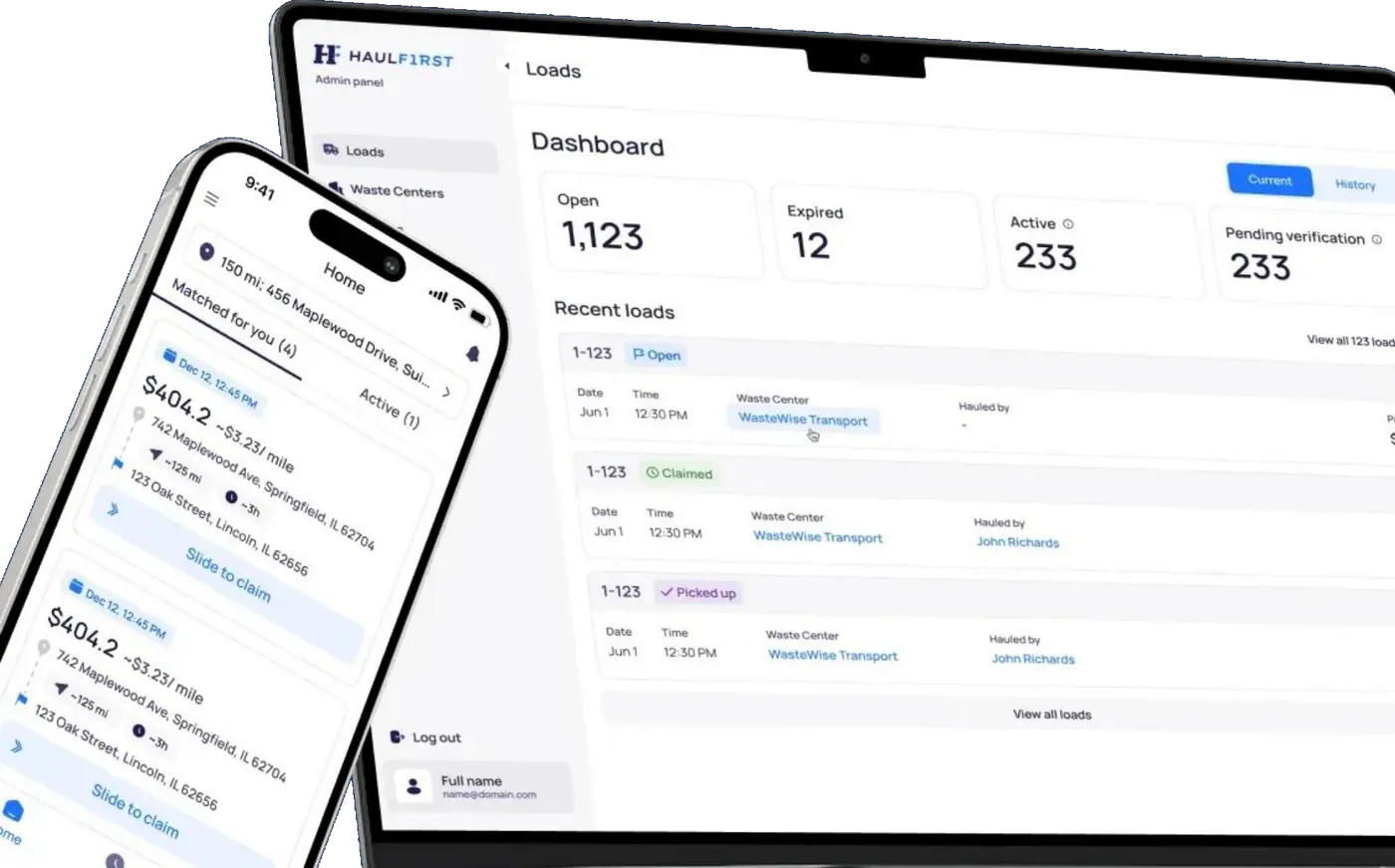
Four connected products on one backend: web and mobile apps for waste centers, a mobile app for haulers, and an admin panel for platform operators.
01 Executive summary
A marketplace MVP that takes every waste load from posting to payment in one system.
Client and market
A U.S.-based logistics startup modernising how waste centers and haulers arrange the transport of waste loads.
Challenge
Loads were arranged through phone calls, scattered messages and existing relationships. The MVP had to turn posting, matching, claiming, pickup, proof, payment and oversight into reliable software rules.
Product
A two-sided marketplace: web and mobile apps for waste centers, a cross-platform mobile app for haulers, and an internal admin panel, all connected through one NestJS backend.
What Digital Growth Labs delivered
- The full MVP built from scratch across web, mobile, backend and admin
- Radius-based load matching and real-time claiming with push notifications
- A Stripe-backed payment cycle with charges, payouts and configurable platform fees
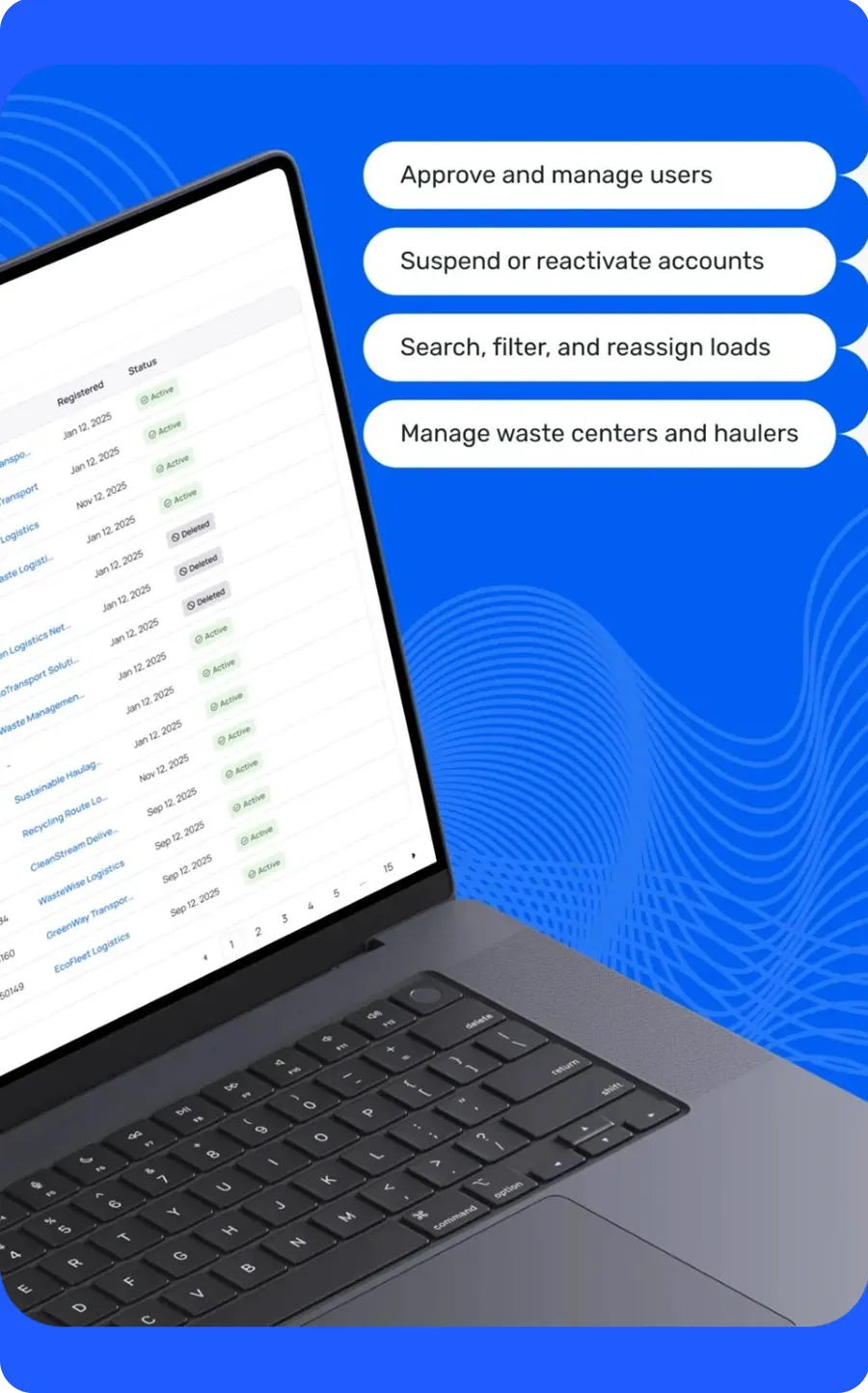
- An admin control centre for approvals, reassignment, status overrides and audit history
4
Connected products delivered
250mi
Load matching radius
1hr
Pickup buffer with auto-reposting
7
Specialists on the team
Attribution. Digital Growth Labs delivered this waste logistics marketplace as white-label delivery partner to SolveIt, where this project is also published.
02 The challenge
Waste loads moved on phone calls and relationships, not on shared, trackable data.
Waste transportation is still often arranged by phone, through fragmented communication and long-standing business relationships. Nobody had a single place to post a load, see who claimed it, confirm the pickup and settle the payment.
Waste centers
Need to post single, recurring or bulk loads with pickup details, then know who is coming and when.
Haulers
Need to find relevant loads inside their service area and claim them without double-booking.
Platform operators
Need to approve users, step in on exceptions, and see every load and payment across the marketplace.
Business goal
Turn manual coordination into a scalable digital marketplace, with a foundation that supports real users from day one and stays flexible for post-MVP features.
Product complexity
Three roles, each with a different device priority: web-first for waste centers, mobile-first for haulers, control tools for admins.
Technical complexity
- Two-sided marketplace logic
- Claim locking
- Radius-based geo matching
- Time-sensitive pickup rules
- Auto-reposting
- Proof of completion
- Charges, payouts, platform fees
- Role-based access
- 2FA and verification
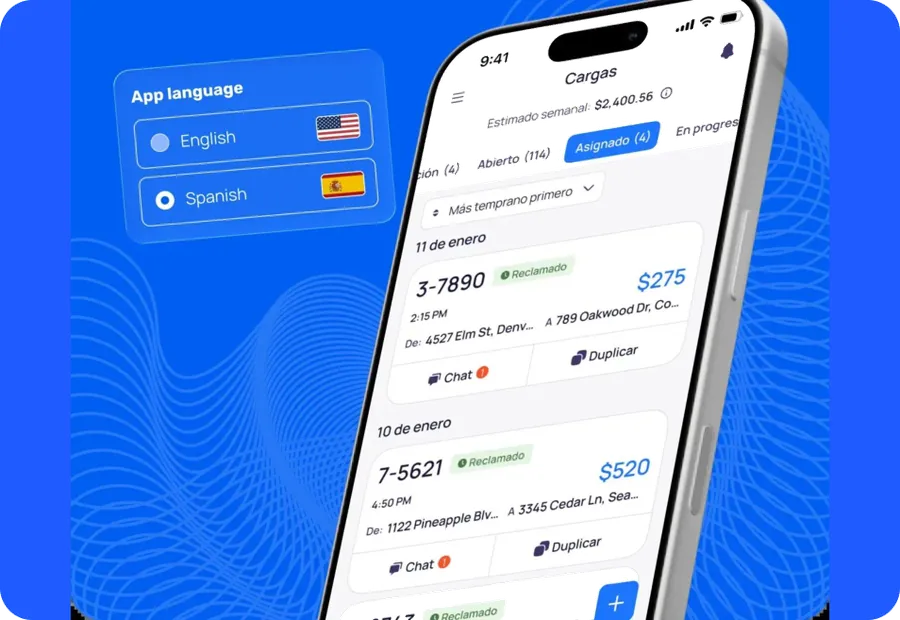
- English and Spanish
Core problem
The hard part was not building apps. It was turning the real-world lifecycle of a waste load into rules that software could enforce for three different roles.
03 Our approach
Every step was anchored to the lifecycle of a single waste load.
Every step connects back to the same goal: a marketplace where a load can be posted, claimed, tracked, completed and paid for in one place.
-
01
Map the load lifecycle
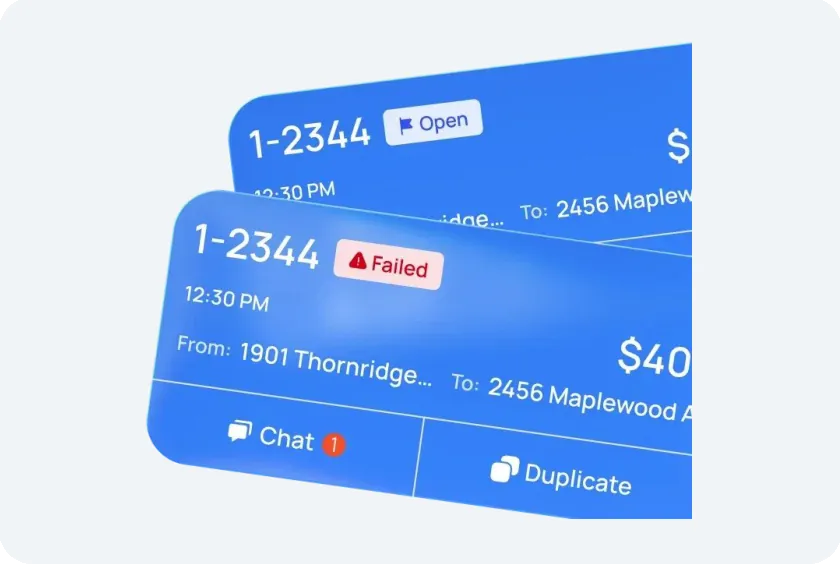
Defined the operational logic behind every load: posting, matching, claiming, pickup confirmation, proof upload, payment and admin control, with statuses from Open to Paid or Failed.
What it solvedReplaced informal phone agreements with explicit, trackable states.
-
02
Scope by role
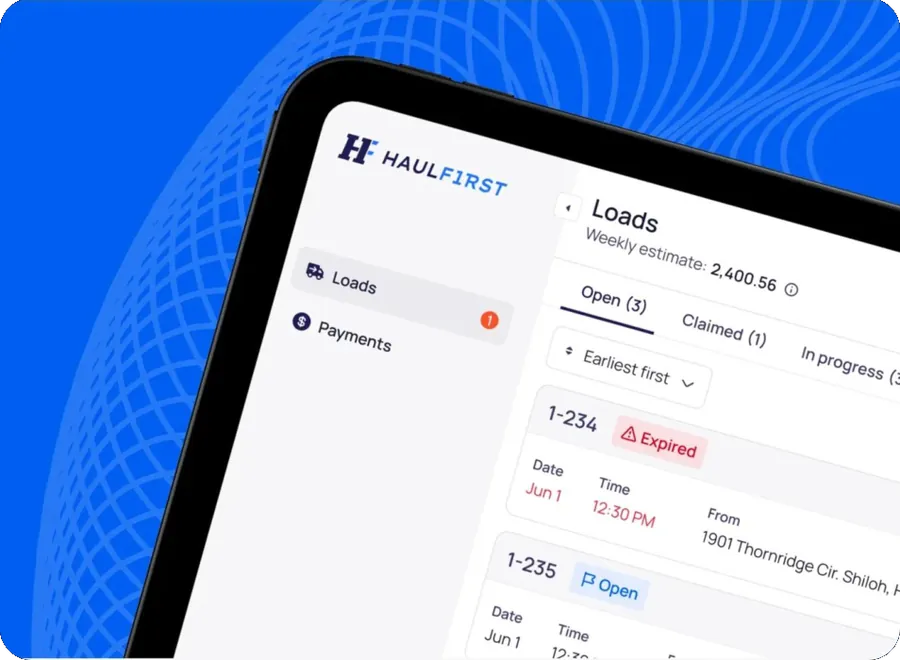
Planned web-first flows for waste centers, mobile-first flows for haulers and control tools for admins, across four connected products.
What it solvedEach role gets the device and depth of control its work actually needs.
-
03
UX/UI from scratch
With no existing UX foundation, designed for operational clarity: clean navigation, simple load cards, clear status labels, accessible forms and shared components.
What it solvedUsers can complete key actions with minimal friction on any screen.
-
04
Architecture
Centralised NestJS backend and PostgreSQL database, split into modules for users, waste centers, orders, transactions, notifications, authentication and payments.
What it solvedOne source of truth for four clients, ready for post-MVP growth.
-
05
Development
Built React apps for waste centers and admins, Flutter mobile apps, Firebase push notifications, Google Maps location services, Stripe payments and Twilio verification.
What it solvedFewer manual follow-ups and faster coordination for both sides.
-
06
QA and launch
Quality assurance across web, mobile, backend and admin.
What it solvedMarketplace rules behave reliably before real loads depend on them.
04 The product
Three roles, one connected flow for every load.
Waste center
Web and mobile
Post a load
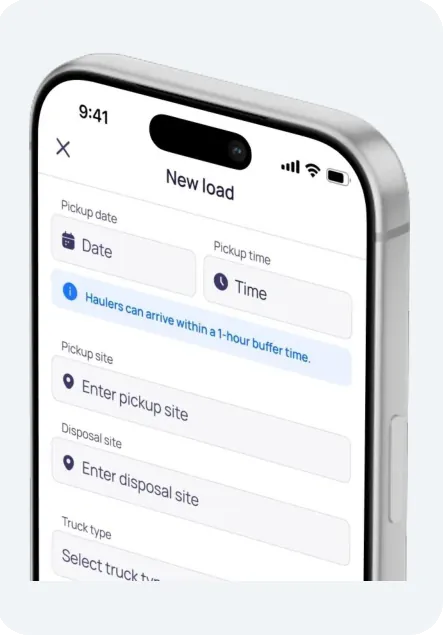
Single, recurring or bulk, with pickup, destination, material, price and schedule
Get notified
Push alert when a hauler claims the load
Confirm pickup
Controls the Picked Up status
Settle
Charge and payment records
One NestJS backend and Firebase push notifications keep claims, statuses, reposts and payments in sync across all four products
Hauler
Mobile app
Set service area
Adjustable matching radius
Claim a load
Claim locking prevents double-booking
Arrive and pick up
1-hour pickup buffer
Upload proof
Photo or ticket; payout tracked
Admin
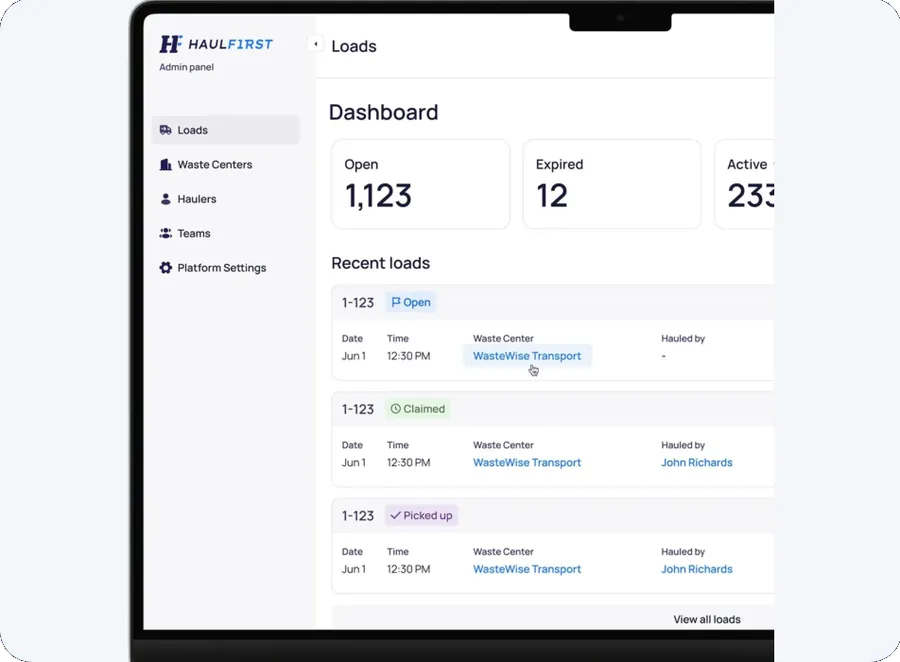
Admin panel
Approve users
Verify haulers and centers
Resolve exceptions
Reassign loads, override statuses
Oversee money
Monitor payments, adjust fees
Audit
Status and action history
04 Key screens
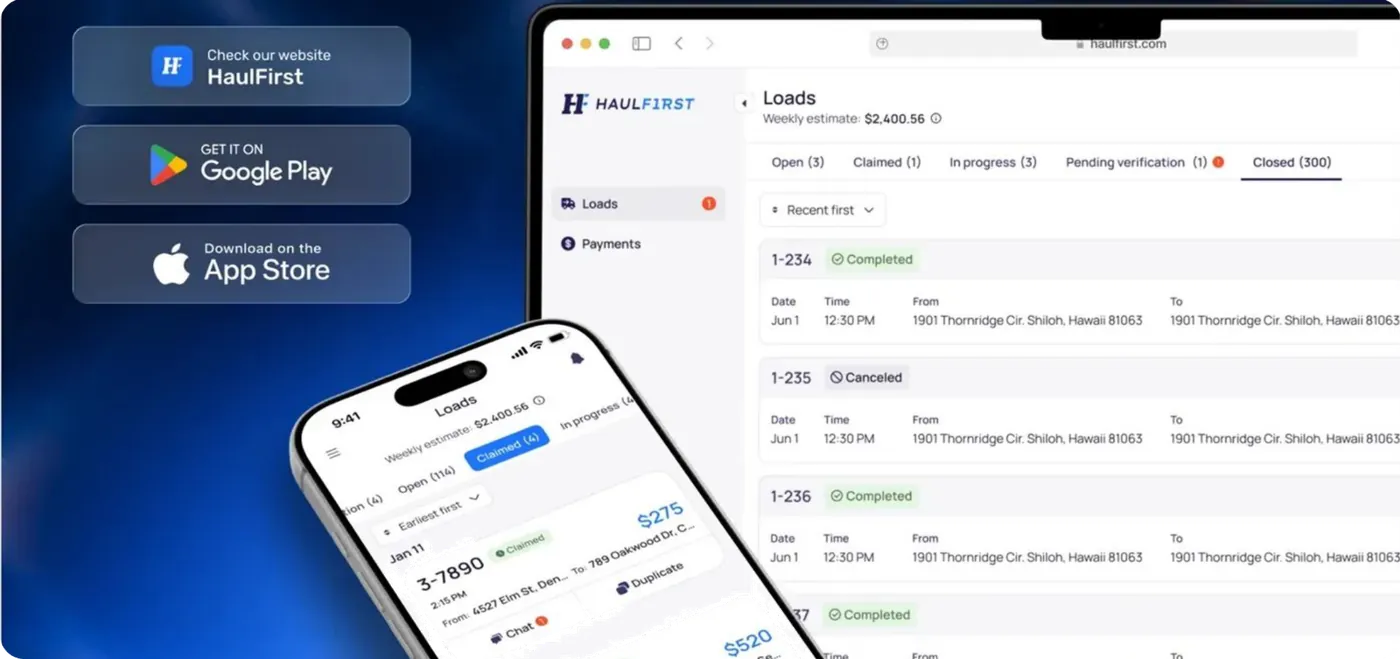
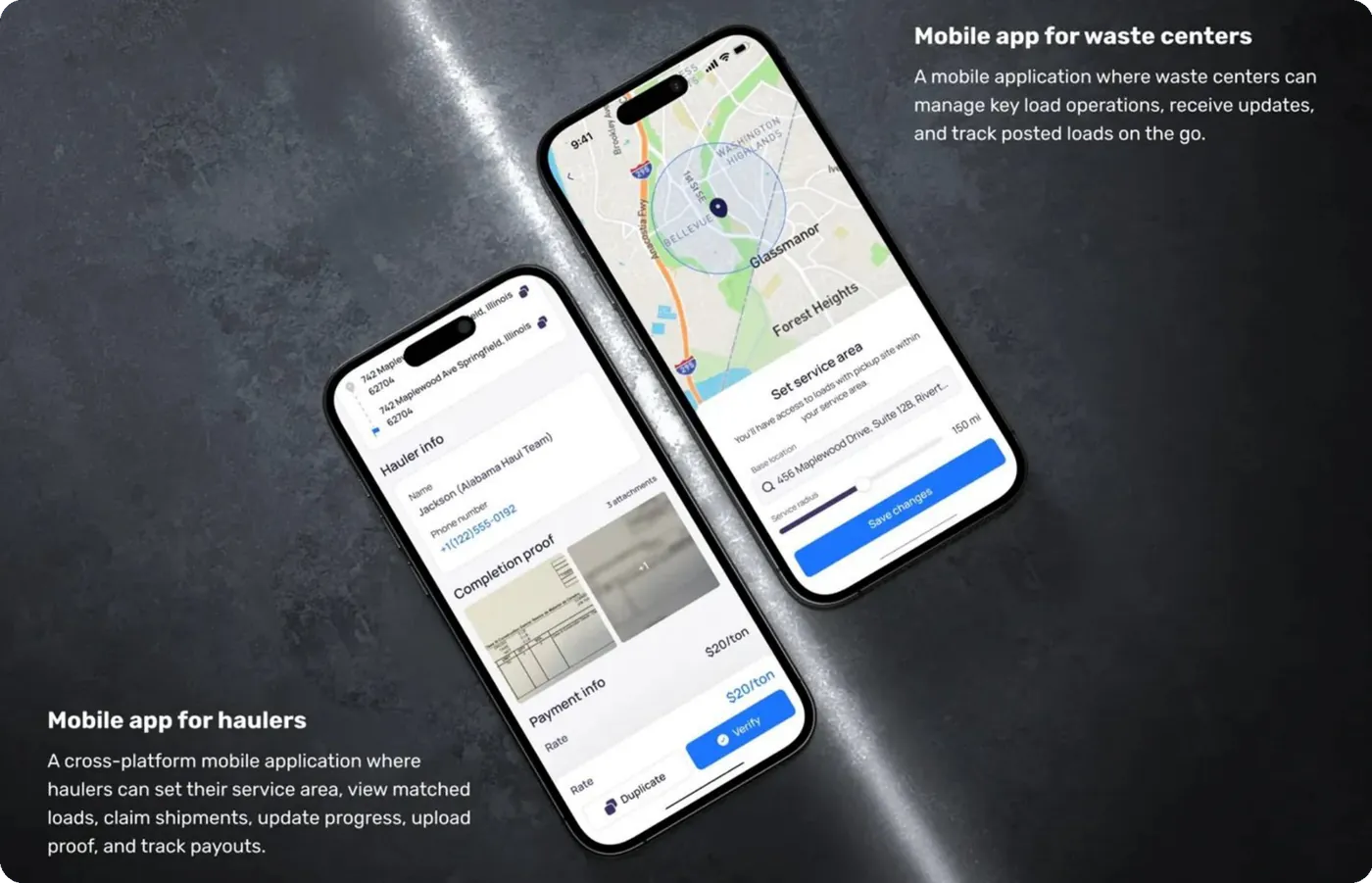
Built for the job each role does, on the device they use.
05 Engineering
One modular backend serves four products, so every client sees the same truth about a load.
Experiences
Four client products
Web app
Waste centers
Mobile app
Waste centers
Mobile app
Haulers
Admin panel
Platform operators
Backend API
Business logic and access
NestJS backend
Business rules, authentication, role-based access, data communication
Data and services
PostgreSQL
Users, centers, orders, transactions, operational records
Firebase Cloud Messaging
Push on web and mobile
Google Maps
Geocoding, Places
Stripe
Payments
Twilio Verify
Verification
Centralised by design
All client apps connect to the same backend services, so a claim, a status change or a payment is recorded once and reflected everywhere.
Modules for growth
Users, waste centers, orders, transactions, notifications, authentication and payments are separate modules, giving post-MVP features a clear place to land.
Real-time where timing matters
Firebase Cloud Messaging pushes matched loads, claims, reposts, pickup updates and completion changes to web and mobile users.
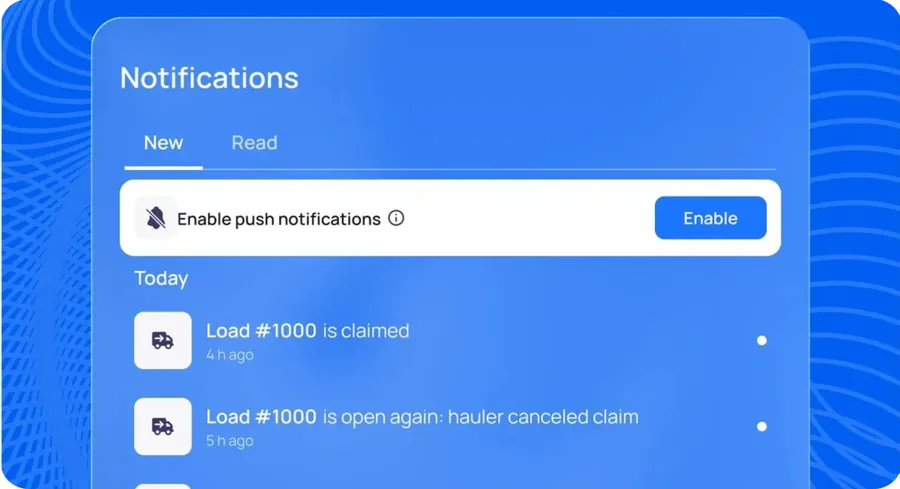
Push notification events
- New matched loads for haulers
- Load claimed by a hauler
- Auto-reposted loads
- Pickup-related updates
- Completion status changes
- Operational alerts
05 Stack and decisions
Proven, well-supported tools, chosen for an MVP that has to run real operations.
- Web and admin
- React, TypeScript
- Mobile
- Flutter (cross-platform)
- Backend
- NestJS, TypeORM
- Database
- PostgreSQL
- Notifications
- Firebase Cloud Messaging
- Maps and location
- Google Maps, Geocoding, Places API
- Payments
- Stripe
- Auth and verification
- JWT, Twilio Verify API, 2FA flows
- Languages
- English and Spanish
- 01
One backend for four products
Load, payment and user logic sit in one NestJS service, so every app works from the same records.
- 02
Rules enforced on the server
Claim locking, the 1-hour pickup buffer and auto-reposting are platform rules, not manual agreements, so they apply the same way for every user.
- 03
Push for time-critical events
Load availability and pickup timing are critical, so key events are pushed through Firebase rather than waiting for users to check.
- 04
Cross-platform mobile with Flutter
Both mobile apps target iOS and Android, matching the store availability shown in the published product.
- 05
Payments modelled from the start
Charges, payouts, Stripe references and configurable platform fees were part of the MVP, so completed loads flow straight into a payment cycle.
06 Key capabilities
Six capabilities that run the marketplace.
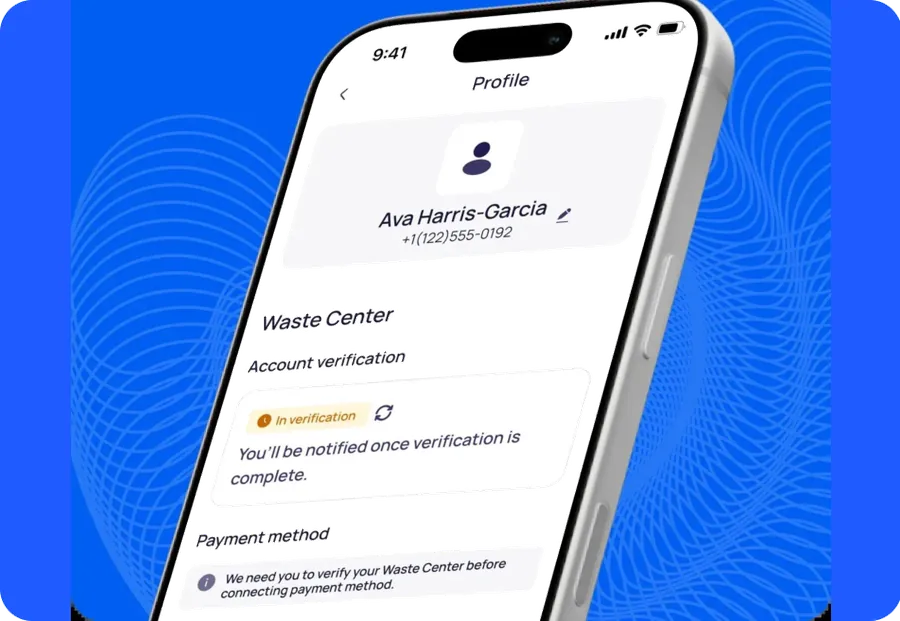
Load posting
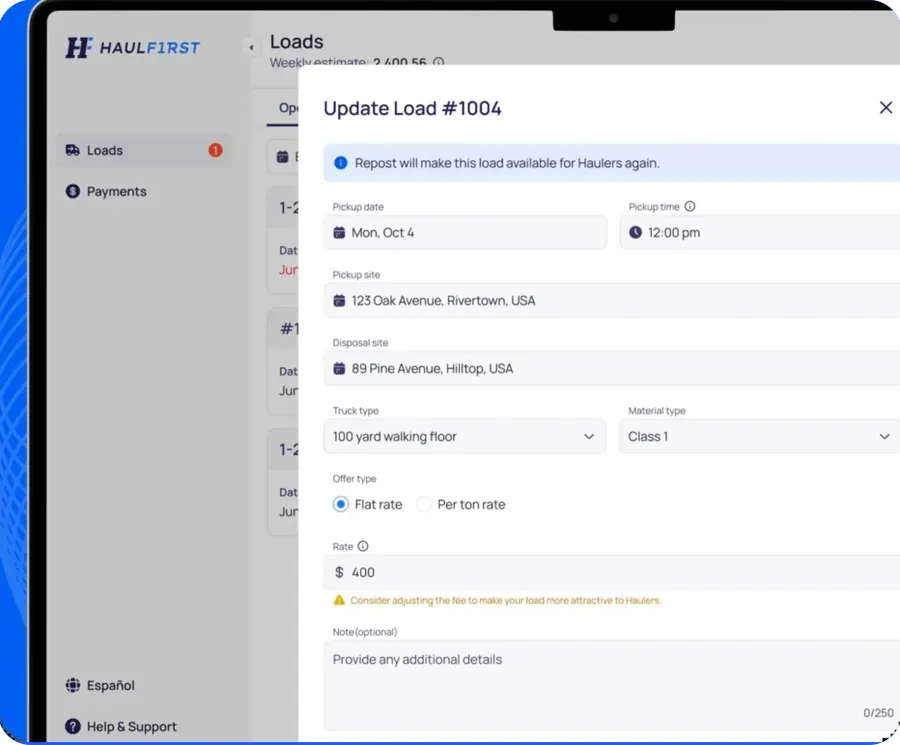
Waste centers create single, recurring or bulk loads with pickup details, destination, material type, price and schedule.
ValueThe information a hauler needs to accept a job is captured once, in a structured format.
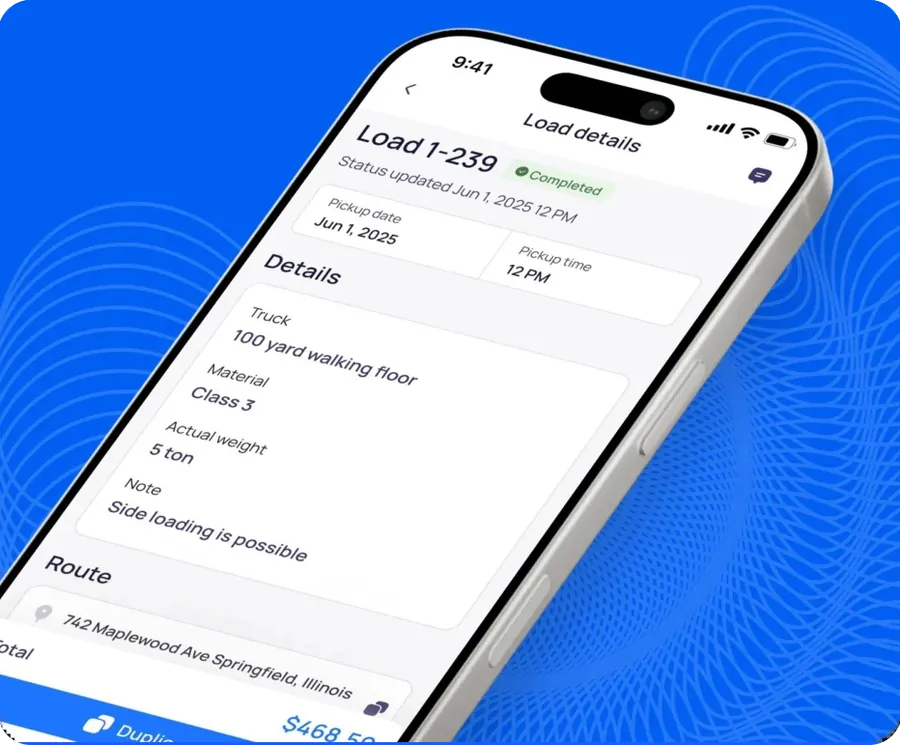
Radius-based matching
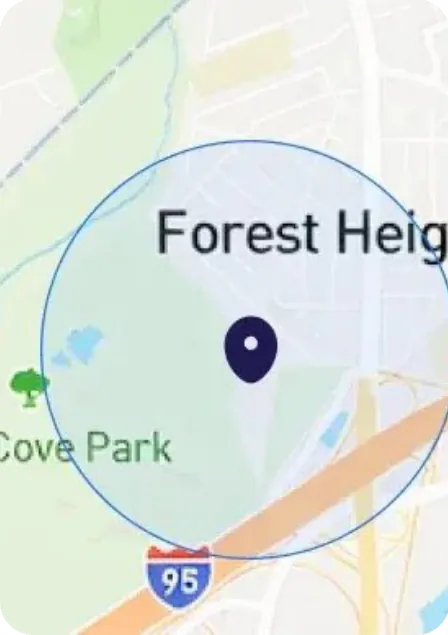
Haulers set a service area and see loads inside it, with a 250-mile matching radius and adjustable radius settings.
ValueHaulers see relevant work instead of scrolling every open load.
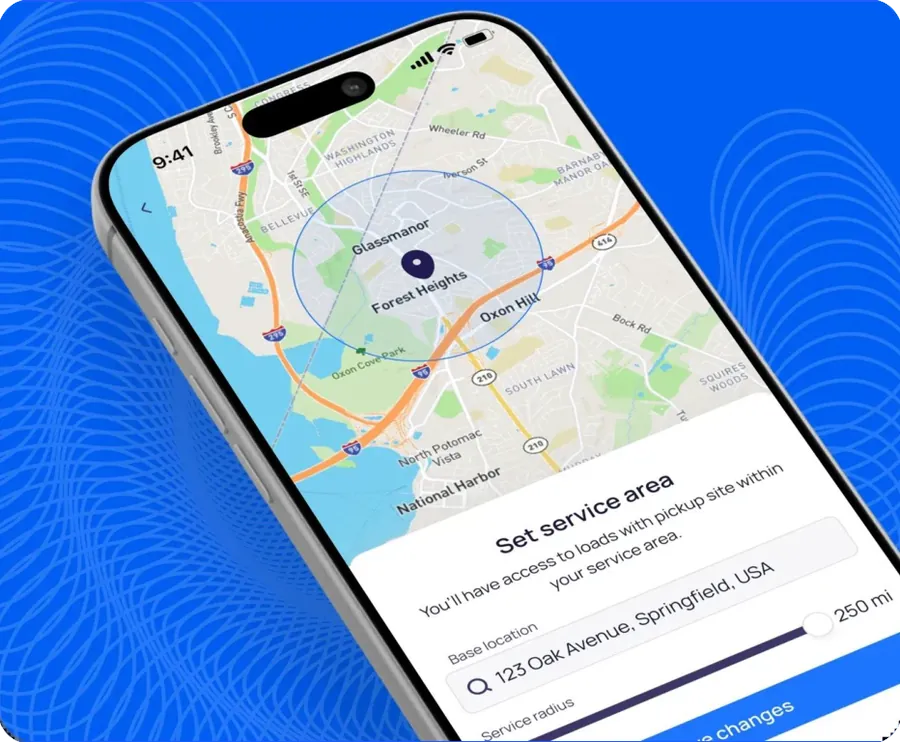
Real-time load claiming
Claiming a load locks it, so two haulers cannot book the same pickup. The waste center gets a push notification when it is claimed.
ValueRemoves double-booking, one of the core risks of informal coordination.
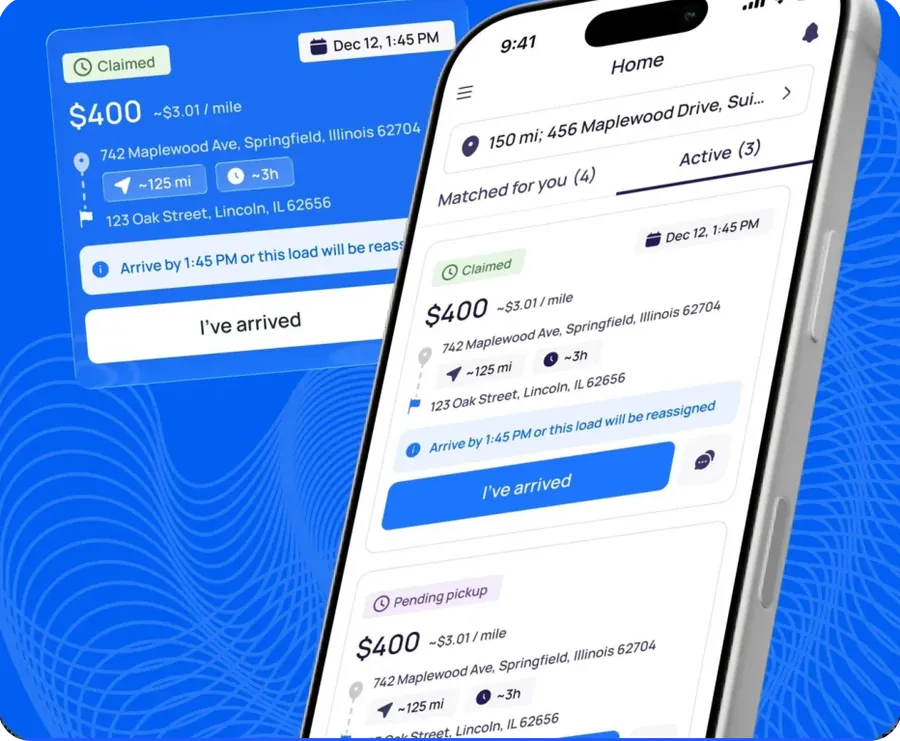
Pickup rules and auto-reposting
Loads carry a 1-hour pickup buffer. Missed pickups can be reposted automatically, the center is notified, and the waste center controls the Picked Up status.
ValueDelays are handled by the platform instead of a round of phone calls.
Proof of completion
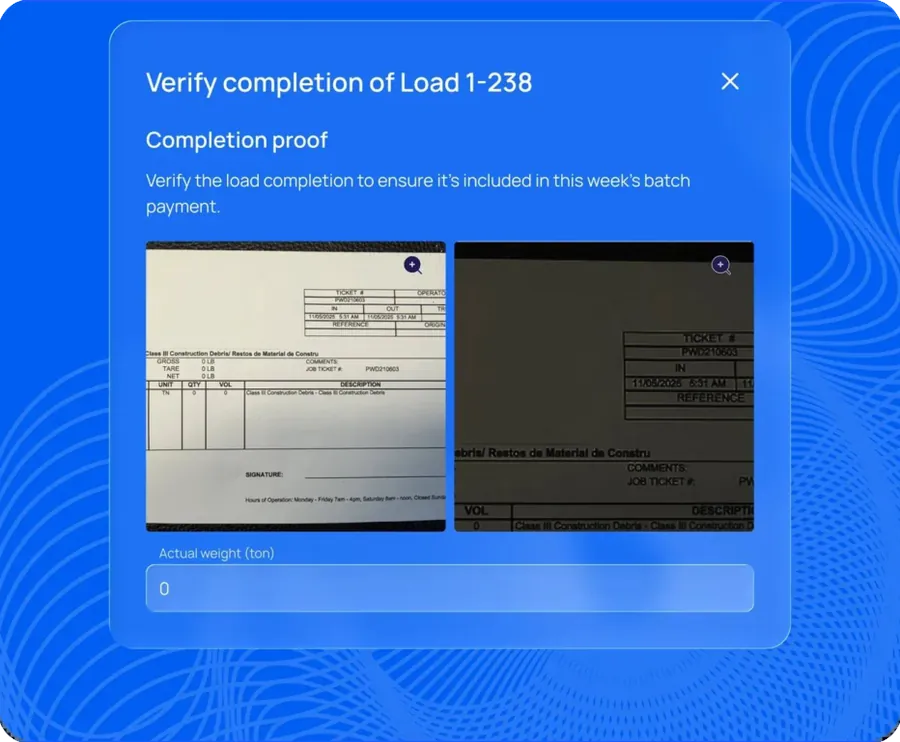
After the job, haulers upload a photo or ticket so the completion can be verified before payment.
ValueGives both sides evidence before money moves.
Payments and platform fees
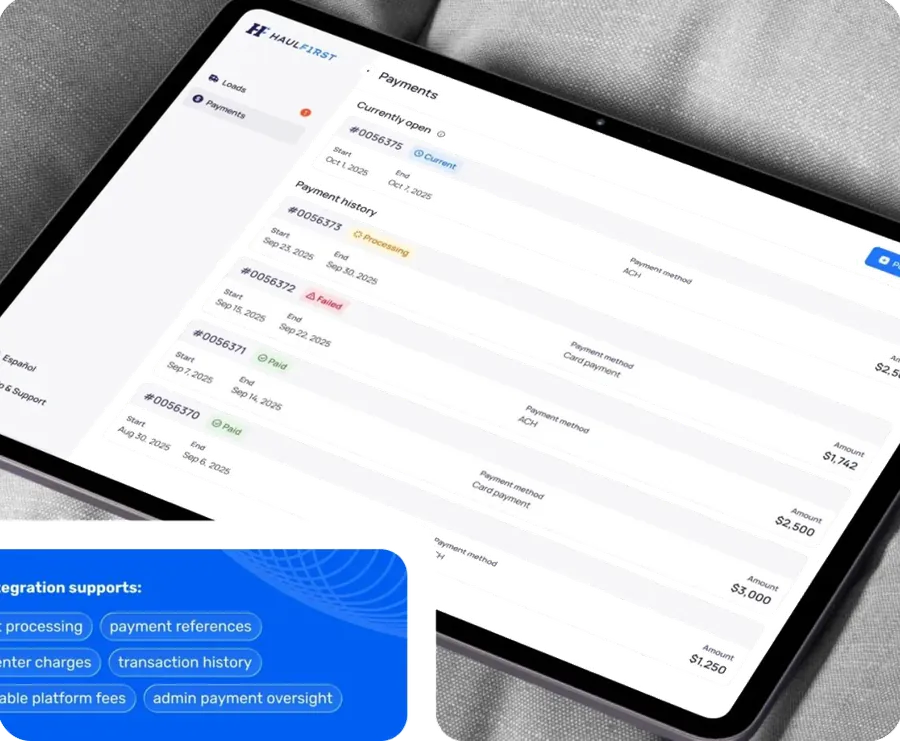
Completed loads run through a structured payment cycle: waste center charges, hauler payouts, Stripe references, configurable platform fees and a full transaction history.
ValueThe marketplace's revenue model works from the first completed load.
07 Results and impact
Manual coordination was replaced with digital workflows across four products.
Delivery outcomes below are as published by SolveIt. Business performance after launch has not been published.
4
Connected products from scratch
Two mobile apps, a waste center web platform and an admin panel on one backend.
250mi
Matching radius
Load discovery based on each hauler's service area, with adjustable radius.
1hr
Pickup buffer
With auto-reposting of missed loads and delay alerts to waste centers.
Manual coordination replaced
Phone-based scheduling and fragmented messages gave way to structured flows for posting, claiming, pickup confirmation and completion proof.
Full load lifecycle covered
Every load moves from Open to Paid or Failed, with payment records, admin oversight and status history.
07 Delivery
A seven-person team delivered the complete MVP ecosystem.
Services
- MVP development
- Web development
- Mobile development
- UX/UI design
- API development
- QA
Deliverables
- Web app for waste centers
- Mobile app for waste centers
- Cross-platform mobile app for haulers
- Admin panel for platform operations
- NestJS backend API and PostgreSQL database
Team
7specialists
Agency partner perspective
“how software can bring structure to a highly manual logistics process”
08 Why it worked
Five decisions turned a manual process into a structured marketplace.
- 01
The load lifecycle was treated as the product
Every state from Open to Paid or Failed is defined, with payment records and status history, so nothing depends on memory or a phone call.
- 02
Each role got its own experience
Web-first flows for waste centers, mobile-first flows for haulers and control tools for admins, instead of one interface for everyone.
- 03
Operational rules live in the platform
Claim locking, the 1-hour pickup buffer, auto-reposting and center-controlled pickup confirmation apply consistently to every load.
- 04
Time-critical events are pushed
Firebase notifications cover matched loads, claims, reposts, pickup updates and completion changes across web and mobile.
- 05
One modular backend underpins everything
Four products share a single NestJS API and PostgreSQL database, organised into modules that can grow after the MVP.
A marketplace only works when both sides trust it. By encoding the real operations of waste transport into clear states, rules and notifications, the MVP gives waste centers, haulers and operators one shared, reliable record of every load.

Have a product idea?
Digital Growth Labs is a product design and engineering partner. We take complex product ideas from concept to launch.
New business
Online
Offices
- 1563 McClure Woodland CA 95776
The waste logistics marketplace was delivered by Digital Growth Labs as white-label delivery partner to SolveIt, where the project is also published. Project facts in this document come from SolveIt's published case study.